
EPSCoR
EPSCoR, or the Established Program to Stimulate Competitive Research, is an NSF program housed under the Office of Integrative Activities that enhances the research competitiveness of areas in the US that do not receive significant NSF funding. These grants are designed to strengthen institutional research capacity and capability.
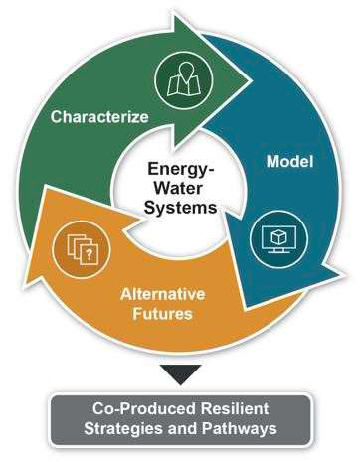
I-CREWS is Idaho's current multidisciplinary NSF EPSCoR RII Track-1 project. This project aims to address the impact of climate, population, and technological change on energy-water (E-W) systems. I-CREWS advances research, education, workforce development initiatives, and partnership capacity in Idaho in two strategic directions. First, it leverages existing academic research strengths in various sciences to build linkages. Second, it expands Idaho's research capacity in computational modeling, machine learning, and artificial intelligence. Using a range of Idaho's communities, landscapes, and watersheds, the main objectives of I-CREWS are to:
- evaluate E-W configurations for various resilience strategies,
- model E-W configurations and their resilience,
- develop future scenarios for E-W trajectories and their resilience.
Idaho State University, the University of Idaho, and Boise State University work together on I-CREWS. Together, these institutions have obtained several collaborative, multiyear grants designed to stimulate research in areas of strategic and regional importance. Previous iterations of this effort are WC-WAVES, MILES, and GEM-3. Importantly, I-CREWS offers sub-awards to support their research and teaching; these grants are limited to researchers at participating institutions.
Dr. Kitty Griswold is ISU's Co-PI for the EPSCoR program at ISU. Connect with her to learn how to get involved. Read more about I-CREWS here.
EPSCoR Success Stories:
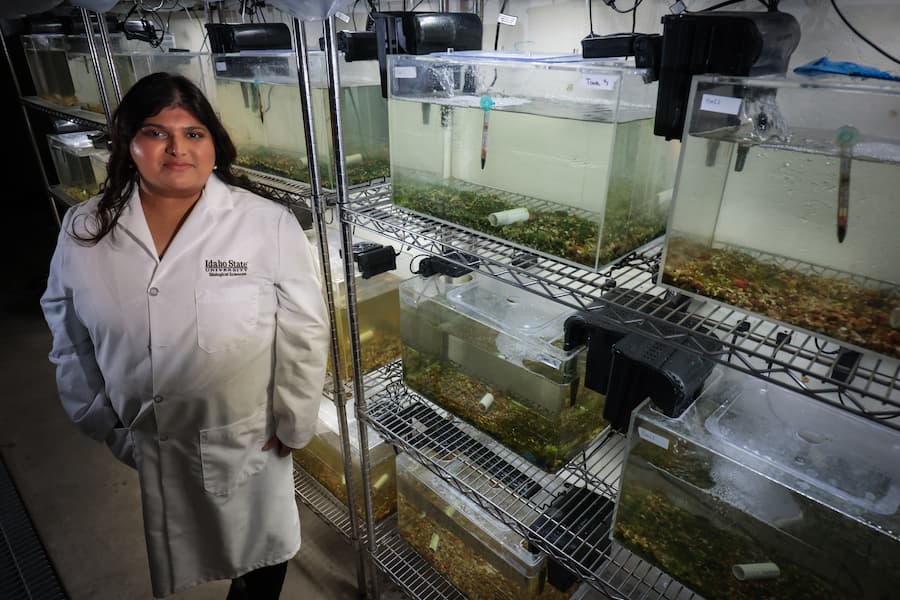
Professor Devaleena Pradhan
Participation in the EPSCoR program is designed to provide researchers with the support and funds to advance their careers. Professor Devaleena Pradhan's work with EPSCoR began with the GEM3 project. Dr. Pradhan's work with Idaho EPSCoR also provided her with funding to advance her role as a research mentor. This work helped Dr. Pradhan to win an NSF CAREER Award. Later, in 2024, Dr. Pradhan was recognized by the Society for Integrative and Comparative Biology with the Broadening Participation Service Award.
“Seed funding through the Idaho EPSCoR program has helped my lab pursue novel research directions, pedagogical innovations, and tremendously contributed to build the capacity of my research program. From virtual working group meetings to in person annual meetings - being affiliated with the GEM3 program as an early career faculty provided me networking opportunities to connect with faculty across Idaho, especially valuable during the pandemic. I learned to incorporate the Vertically Integrated Project (VIP) approach into my NSF CAREER proposal, which was very well received by the panelists. This VIP has spurred successful collaborations with other faculty in my department and above all, provided immersive multi-semester research experiences, building technical and scientific skills for 18 students in 2.5 years. The Summer Authentic Research Experience (SARE) program provided summer stipends to 5 undergraduates from my lab, greatly enhancing productivity over the years.” Dr. Pradhan. 2025 Learn more about Dr. Pradhan's research here.
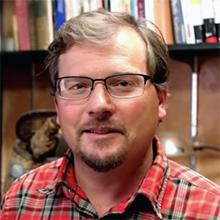
Professor Colden Baxter
EPSCoR is an important pathway to advance Research at ISU. Professor Colden Baxter has been involved in Idaho EPSCoR since 2004. Following his involvement with the Idaho EPSCoR project, Dr. Baxter has received funding from a variety of sources to support his research, including the Shoshone-Bannock Tribes and the National Science Foundation. In 2018, Dr. Baxter received the Jean'ne M. Shreeve NSF EPSCoR Research Excellence Award. He has also served as president for the Society for Freshwater Science.
"The NSF-EPSCoR program has been instrumental in my success as a researcher, especially by providing support that has fueled the development of key collaborations and changes in research culture throughout my career, fueling innovative efforts working with scientists and students across the earth, life and social science disciplines aimed at addressing complex environmental problems facing our state and region. NSF-EPSCoR awards have helped transform and improve the ways we connect the science we do with our local and regional communities. This has been reflected, for example, in the evolving role of ISU's Center for Ecological Research and Education, which I direct. I am particularly grateful for the ways in which these grants have helped us work with the community to produce science applied to the Portneuf River, and grown research and educational partnerships with the Shoshone-Bannock Tribes." Dr. Colden Baxter, 2025. Learn more about Dr. Baxter's research here.
INBRE
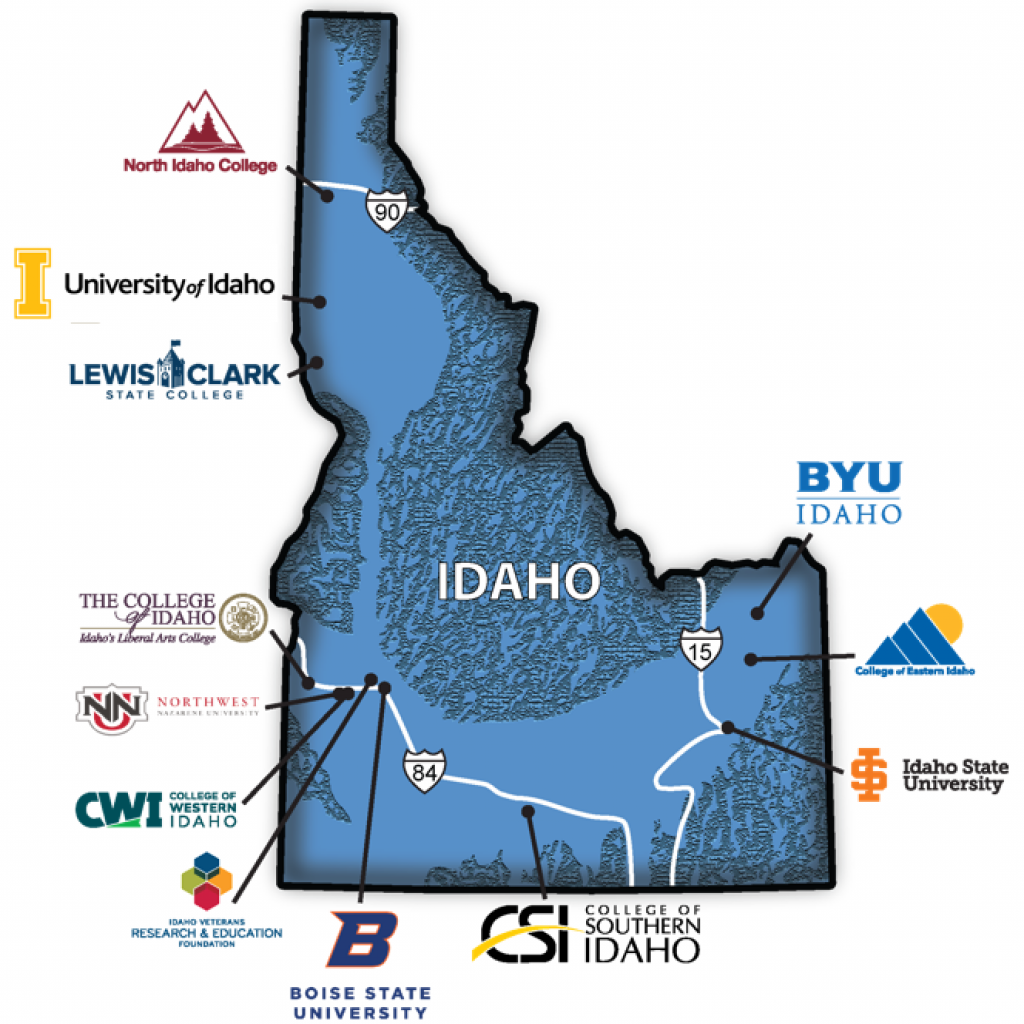
The Idaho INBRE Program is a statewide scientific network of research and educational collaborations. The aim is to improve the health of all Idahoans by augmenting and strengthening Idaho’s capacity to do and sustain biomedical research and education. Idaho INBRE affects biomedical research at every level and in all regions of Idaho. The program delivers unique, innovative, state-of-the-art biomedical research that contributes to improving human health. Additionally, the program invigorates faculty careers by sponsoring mentored, collaborative research while providing rich, intensive, competitive research experiences for students who are training as Idaho's and the nation’s next generation of biomedical scientists. Through our innovative Industry Intern program, the program is developing pathways to employment in Idaho industries. The image below shows all participants of Idaho's INBRE network. (Source.)
Idaho INBRE Supports Student Researchers
The Idaho INBRE Program is offering paid research awards for students interested in biomedical research. The Idaho INBRE Undergraduate Fellowship is a competitive monetary award for students (INBRE Fellows) to conduct mentored research. The program pays each awarded INBRE Fellow to work full-time in an established faculty laboratory for 10 weeks during the summer. In addition to conducting guided research, INBRE Fellows will attend professional development and scientific seminar presentations and will prepare a poster highlighting their work to be presented at the Idaho INBRE Statewide Research Conference in Moscow. Learn more about the INBRE Fellowship Program here.
INBRE Leadership
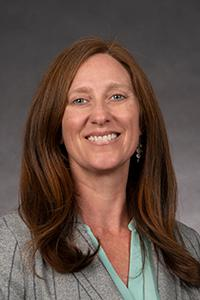
As campus leader, Professor Heather Ray guides the ISU INBRE program and assists in statewide strategic decision-making. She will also oversee ISU’s INBRE Undergraduate Fellowship Program. “As a new faculty member, getting involved with the Idaho INBRE program was invaluable to my own professional growth, as well as that of the students working in my lab who received fellowships. Now, I am excited to take on this new role where I can help others to get involved and gain everything that INBRE has to offer, as well as promote the biomedical research enterprise in Idaho,” said Ray recently.
INBRE Success Stories
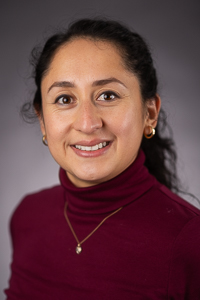
Professor Lizabeth de la Cruz
In 2024, I was awarded the Pilot INBRE grant, which affirmed the significance of my research and provided the resources necessary to initiate key experiments. These efforts are now supporting my applications for larger NIH and NSF grants to advance research in the aging and glucose metabolism field and research opportunities for undergraduate and graduate students at ISU. This grant also allowed me to advance the careers of three graduate students at ISU, who attended and presented their work for the first time at the Biophysical Society Conference in Los Angeles.
Learn more about Professor de la Cruz's research here

Professor Michael Thomas
I was hired at ISU in 2003 into a position created by BRIN, which was renamed INBRE shortly afterwards. So, I've been associated with the Idaho INBRE program almost since its inception. For some years, I was involved in running the program at ISU (selecting graduate and undergraduate research fellows, helping build and serving as academic director of our INBRE-supported Molecular Research Core Facility – MRCF, conducting INBRE-supported local symposia, etc). In about 2012, I became the ISU campus director of Idaho's INBRE program (when Chris Daniels retired) and served in that capacity until 2017 (when I became department chair and Jim Groome replaced me as INBRE director). After refocusing my lab on the study of bacteriophages, I again began hosting INBRE undergraduate and graduate fellows and also attending the INBRE conference in Moscow for the first time since 2018. When I developed our NIH-funded R25 research-training program ("ISU Bridges to Research Careers," – BRC), I modeled this on INBRE: Our network of faculty researchers, recruitment and connection with student participants, building research capacity to engage these participants, oversight by an advisory committee, etc. All these activities have been informed by and modeled on the Idaho INBRE program. And, Idaho INBRE provided seed funding (a graduate summer RA position) that, along with an ISU Small Grant (from OfR), provided preliminary data and established feasibility of the proposed program.
Learn more about Professor Thomas’s Research here.
CRT-D
IDeA Clinical & Translational Research Development (CTR-D) Award program
CTR-D supports clinical and translational research, workforce development, and infrastructure enhancement at health research organizations in IDeA-eligible states that have limited clinical and translational research capacity. CTR-D awards are intended to build a foundation of clinical and translational research expertise and infrastructure that will enable recipients to conduct research on diseases and health challenges faced by the populations they serve.
In 2025, ISU and Boise State University were awarded a CTR-D grant, Healthy Idaho. The overall mission of the Healthy Idaho CTR-D Program is to build a foundation that supports clinical and translational (C&T) research, workforce development, and infrastructure enhancements to address the health needs of Idahoans.
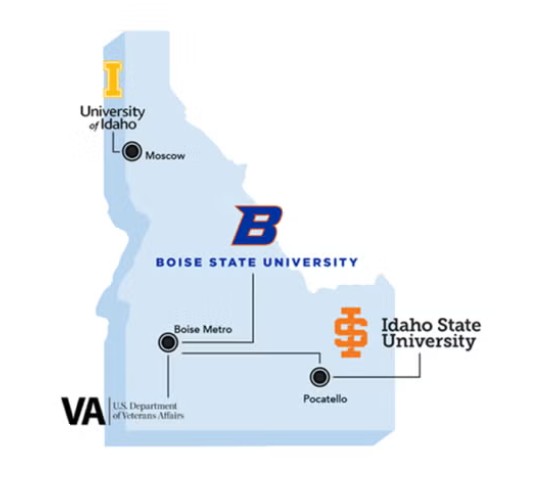
The Healthy Idaho CTR-D program is a united entity including four institutions: Boise State University will be the Lead Applicant Institution, joined by the Lead Institution, Idaho State University. Two partnering institutions are the University of Idaho and the Boise Veterans Affairs Regional Medical Center. We will also work with four clinical affiliates (affiliate health systems), Kootenai Health, the Idaho Community Health Centers Association, Saint Alphonsus Regional Medical Center, and St. Luke’s Health System.
Goals
The Healthy Idaho CTR-D program’s three goals include:
- Increase collaborative and multidisciplinary C&T research between, and at each, participating institution.
- Grow the C&T research workforce, while providing workforce development to academic and clinician investigators.
- Develop infrastructure needed to support C&T research that targets the healthcare needs of Idahoans and addresses common barriers.
The plan for enhancing perspectives is integrated within the CTR-D program and includes: (1) transdisciplinary research fields (e.g. education to nursing), (2) engagement from different types of institutions (universities, medical education programs, the veterans administration, and healthcare systems), (3) geographic and regional heterogeneity throughout the state of Idaho, (4) C&T researchers with different career stages ranging from medical students to experienced investigators, (5) participation of individuals from diverse backgrounds
Major functions
To achieve the program’s unified goals, the four partnering organizations, along with input from the clinical affiliates, have identified barriers to C&T research and mechanisms by which to address them. Plans have also been developed for collaborating with and leveraging the resources and infrastructure of other IDeA Programs.
The CTR-D program will utilize innovative and reliable approaches to change, which will be administered through five program Cores.
- Administrative Core (AC): Will provide program coordination, communication, and assessment of CTR-D activities that span partner institutions and clinical affiliates.
- Professional Development (PD) Core: Will provide training resources, access to mentoring, and formal expert reviews of grant proposals for Idaho CTR-D partner and affiliate researchers.
- Community Engagement & Outreach (CEO) Core: Prioritize engagement with patients and community clinicians, and other stakeholders to work together in community-engaged research and to establish the first Idaho-focused Practice-Based Research Network.
- Research Design, Compliance, and Data Management (RDCD): Offers integrated Clinical and Translational research support services statewide that include biostatistics and study design, regulatory compliance, electronic health data access, and management.
- Health Research (HR): Offer, evaluate, and recommend the award of Pilot and Developmental Project grants to investigators for conducting Clinical and Translational research within the partner and clinical affiliate institutions. Explore CRT-D funding opportunities here.