
Masters Programs
.png)
.png)
.png)
Do you want to be a Masters Student?
Click here to Learn How to Apply!
Master Program Objectives
Mission Statement
The mission of the Master of Counseling (M.COUN.) program faculty is to nurture the next generation of highly skilled and ethically-minded counseling professionals. The Department of Counseling faculty believe that providing comprehensive education, grounded in evidence-based practices, and a commitment to creating an environment of belonging, accessibility, as well as being representative of the world within which counselors work, prepares students to excel in counseling practice, research, advocacy, and leadership within the counseling profession. The Master of Counseling degree is designed to be the strong foundation upon which graduates enter a lifetime career in the counseling profession.
Objectives
The counseling program offers four specialty practice areas to meet students’ learning and professional career goals:
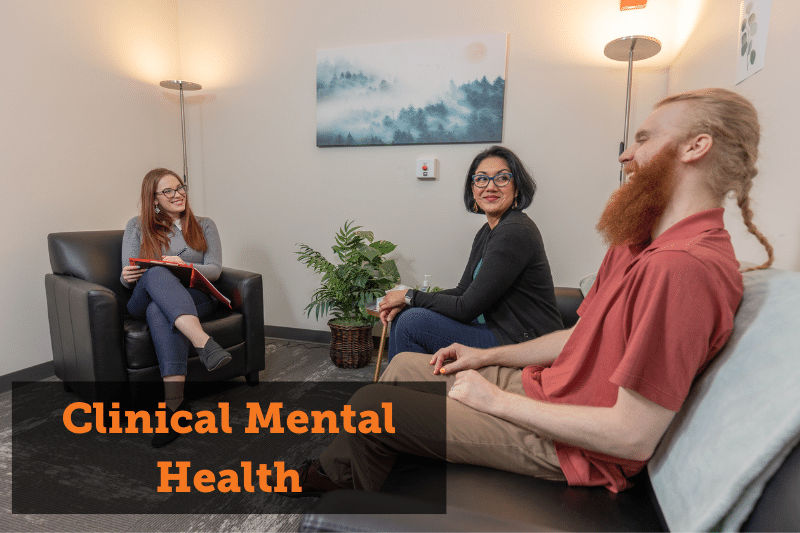
Marriage, Couple, and Family Counseling; Clinical Mental Health Counseling; Clinical Rehabilitation Counseling; and School Counseling.
Students will experience a variety of learning opportunities through rigorous coursework, hands-on experiences, and supportive mentorship. We strive to empower our
students to make meaningful and healthy contributions to the well-being of individuals, couples, families, and communities while upholding the highest standards of professionalism and ethical conduct. The clinical nature of this program allows students to graduate with confidence in their abilities to meet future client needs and state licensure requirements as professional counselors. In addition, graduates from the School Counseling specialty practice area meet the requirements for the Idaho School Counselor Pupil Service Staff Certificate; while graduates from the Clinical Rehabilitation Counseling specialty practice area meet the requirements to apply for the Commission on Rehabilitation Counselor Certification.
Our graduate counseling programs are designed to meet the educational requirements established by the Idaho Licensing Board for the Licensed Professional Counselor (LPC) License.
• The program includes at least 60 credit hours of counseling coursework within a CACREP-accredited framework, satisfying Idaho’s baseline educational requirement for LPC licensure.
• The curriculum covers all core content areas required under Idaho licensing standards, including the helping relationship, human growth and development, social and cultural foundations, career/lifestyle development, group counseling, appraisal and assessment, professional orientation, and research and evaluation.
• The program incorporates a graduate-level practicum that meets or exceeds Idaho’s minimum practicum requirement for LPC eligibility.
Objectives for all students within the counseling program align with the CACREP core areas and seek to maintain each of the following for all graduates.
- Develop a strong sense of professional counseling identity and ethical practice.
- Facilitate student exploration of the meaning and practice of culturally competent
counseling and exploration of personal biases, privileges, and identities. - Prepare students to conceptualize clients from a developmental perspective and consider how this may impact client experiences throughout the lifespan.
- Prepare students to work with clients in any stage of career development and life-work balance.
- Provide students with a foundational knowledge of counseling skills and building
therapeutic relationships. - Prepare students to engage with group counseling facilitation and systems approaches.
- Prepare students to be competent in clinical assessment, program evaluation and
consumers and producers of knowledge.
Student Professional Objectives:
In addition to the above curricular objectives, the Department of Counseling has program specific objectives. These include:
- School Counseling students will obtain certification as school counselors.
- Students in all majors (Marriage, Couple, and Family Counseling, Clinical Mental Health Counseling, School Counseling, and Student Affairs Counseling) will obtain the appropriate state licensure as professional counselors.
In addition to the educational requirements, Idaho LPC licensure requires several steps, and the ISU Department of Counseling actively supports students in understanding and completing these requirements. These include:
• Completing 1,000 hours of supervised post-degree professional experience, including at least 400 hours of direct client contact.
• Securing supervised practice under a qualified clinical supervisor who meets Idaho Board criteria, along with proper documentation of all supervised hours.
• Passing the National Counselor Examination (NCE), administered by the National Board for Certified Counselors (NBCC).
• Submitting all required materials to the Idaho Licensing Board, including official transcripts, supervision documentation, and all licensure application forms.