
.jpg)
Steve Chiu
Ph.D. - Professor and Chair
Office: Lillibridge, Room 217
Dr. Steve C. Chiu is Professor and Chair of the Departments of Computer Science and Electrical and Computer Engineering at Idaho State University. Dr. Chiu received his Ph.D. in Electrical and Computer Engineering from Northwestern University in 2004, an M.S. degree in Engineering Management from Northwestern University in 1995, and a B.S. degree in Electrical Engineering from University of Illinois at Chicago in 1990. Steve's research interests include embedded systems, communications, and microelectronics. He is affiliated with the Measurement and Control Engineering Research Center at ISU. Steve has published more than 60 refereed conference and journal articles in his areas of research.
Dr. Chiu refereed for multiple publications in electrical and computer engineering, including IEEE Computing in Science and Engineering, Journal of Parallel and Distributed Computing, Journal of Future Generation Computing Systems, among others. He served on the editorial review board of the International Journal of Handheld Computing Research, and has been a guest editor for the Journal of Supercomputing. Steve is a member of the Tau Beta Pi Engineering Honor Society and a Senior Member of IEEE. He was selected as a faculty attendee at the National Academy of Engineering’s 2013 Frontiers of Engineering Education Symposium. He was a 2019 Fulbright-NSF US Scholar in cyber security and critical infrastructure protection. Prior to academia, he worked at AT&T/Lucent and Underwriters Laboratories as electrical and R&D engineers.
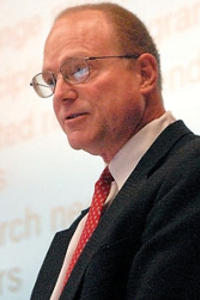
David Beard
Ph.D. - Professor and Curriculum Coordinator
Office: Colonial Hall, Room 232
David Beard is a Professor of Computer Science and has been at ISU for over 20 years. He double majored in Math with a Computing Emphasis and Philosophy at Hope College (1978 before earning a Ph.D. in Computer Science from the University of Michigan Ann Arbor (1985) focused on Databases and Human Computer Interaction. Dr. Beard has worked for Ford Motor Company Engineering, GTE Government Systems, and Siemens Corporate Research.
Dr. Beard has over 95 patents, publications and presentations, including the Journal of Radiology, of Behaviour & Information Technology, the Journal of Human Computer Interaction, SIGCHI, and CSCW. He has been principal investigator on National Institute of Health and U.S. Army grants, served on NIH and Army study sections reviewing grant proposals, and conducted reviews for the National Science Foundation and numerous journals and conferences. Dr. Beard is past chair for the society for Computer Applications in Radiology and served on the Computer Science, Radiology, and Medical Informatics faculty at UNC Chapel Hill. He has built interactive database visualization tools involving hundreds of thousands of lines of code in 31 programming languages for Engineers, the U.S. Army, homeland security, hospitals, and Radiologists.
Dr. Beard taught his first programming class in 1980. He has taught Introduction to Programming (CS-I) in seven languages as well as CS-II (Object-Oriented Programming), Data Structures, Algorithms, Databases, Advanced Databases, Lisp, Software Engineering, Computer Science Senior Project, Computer Organization, System Programming and Assembly, and Human Computer Interaction.
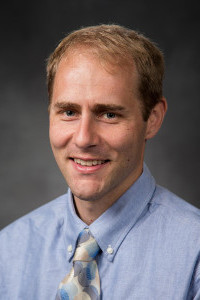
Paul Bodily
Ph.D. - Associate Professor
Office: Colonial Hall, Room 228
Website: https://portneuf.cose.isu.
Computational Creativity, Bioinformatics, Artificial Intelligence, Machine Learning, Natural Language Processing
Affiliations
Computer Science
College of Science and Engineering
College of Business
Education
Ph.D. Brigham Young University, Computer Science, 2018
M.S. Brigham Young University, Computer Science, 2013
B.S. Brigham Young University, Informatics, 2010
B.A. Brigham Young University, Italian, 2010
Minor, Brigham Young University, Computer Science, 2010
Minor, Brigham Young University, Music, 2010
Bio
Research Interests
Computational Creativity, Bioinformatics, Artificial Intelligence, Machine Learning, Natural Language Processing
Teaching Interests
Artificial Intelligence, Theory of Computation, Algorithms, Machine Learning, Natural Language Processing, Computational Creativity

Farjana Eishita
Ph.D. - Assistant Professor
Office: Colonial Hall, Room 231
Affiliation:
College of Science and Engineering
Computer Science
Education:
- PhD (Computer Science), University of Saskatchewan, Canada, 2017
- M.Sc. (Computer Science), American International University Bangladesh (AIUB), 2009
- B.Sc. (Computer Science), American International University Bangladesh (AIUB), 2008
Bio:
Farjana Z. Eishita is an Assistant Professor at the Department of Computer Science at the Idaho State University (ISU). Prior to joining ISU Farjana was an Assistant Professor at the department of Computer Science at the University of New Orleans (UNO). Farjana’s research focuses in the areas of Augmented/Virtual Reality (AR/VR) Game experience along with their impacts on diverse sectors such as Cybersecurity, Health, Education, and Training. Her research directly benefits the designated community (e.g., physicians, valetudinarian, educators, students) with a robust digitized framework, accessibility as well as enhanced efficacy.
Besides her research and teaching Farjana has served as Faculty advisor of Women in computing ACM-W chapter-UNO. Farjana Has been awarded as a Faculty Scholar at Grace Hopper Conference both in 2020 and 2021.
Farjana earned her doctoral degree in Computer Science from the University of Saskatchewan, Canada in 2017. Her doctoral dissertation examined confrontation of sensor noise in Augmented Reality Gameplay entitled – Analyzing the Impact of Spatio-Temporal Sensor Resolution on Player Experience (PX)in Augmented Reality (AR) Games.
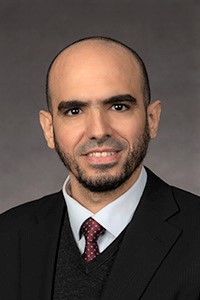
Mostafa Fouda
Ph.D. - Associate Professor
Office: Tingey Administration, Room 281
Website: https://www.mostafafouda.com/
Machine Learning, Artificial Intelligence, Cybersecurity, Healthcare, Image Processing,
Signal Processing, Internet of Things (IoT), Wireless and Mobile Networks
Affiliations
Electrical and Computer Engineering
College of Science and Engineering
Computer Science
Education
Ph.D. Tohoku University, Information Sciences, Japan, 2011
M.S. Benha University, Electrical Engineering, Egypt, 2007
B.S. Benha University, Electrical Engineering, Egypt, 2002
Bio
Mostafa M. Fouda joined ISU in the Fall of 2020 as an Assistant Professor of Electrical and Computer Engineering. He received his Ph.D. degree in Information Sciences from Tohoku University, Japan in 2011. He has more than 60 publications in international conferences, journal papers, and book chapters. His research interests include cyber-security, machine learning, Internet of Things (IoT), 6G networks, and healthcare applications. He has served on the technical committees of several IEEE conferences. He is also a Reviewer in several IEEE Transactions and Magazines. He is an Editor of IEEE Transactions on Vehicular Technology (TVT) and an Associate Editor of IEEE Access. He is a Senior Member of IEEE.
Dr. Fouda previously held multiple academic positions such as an Associate Professor at Benha University (Egypt), an Assistant Professor at Tohoku University (Japan), and a Postdoctoral Research Associate at Tennessee Tech University (USA).
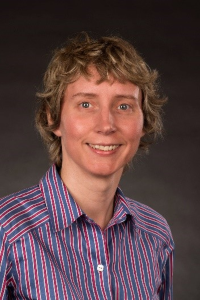
Leslie Kerby
Ph.D. - Associate Professor
Affiliate Faculty of Nuclear Engineering
Office: CAES 285 (Idaho Falls)
Data Science, Computational Science, Nuclear Science
Education
Ph.D. University of Idaho, Nuclear Engineering, 2015
M.S. University of Idaho, Nuclear Engineering, 2013
M.B.A. University of Wisconsin-Whitewater, Finance, 2004
B.S. Brigham Young University, Physics, 1998
About
Minhaz Zibran
Ph.D. - Professor and Graduate Program Director
Office: Colonial Hall, Room 234
Website:
http://sites.google.com/view/
Affiliation:
College of Science and Engineering
Computer Science
Education:
- Ph.D. (Computer Science), University of Saskatchewan, Canada, 2014
- M.Sc. (Computer Science), University of Lethbridge, Canada, 2007
- B.Sc. (Computer Science and Information Technology), Islamic University of Technology, Bangladesh, 2002.
Short Biography
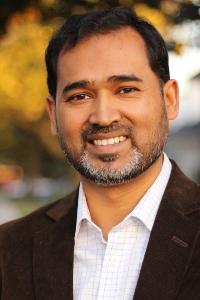
Dr. Minhaz F. Zibran is an Associate Professor of Computer Science (CS) at the Idaho State University (ISU), USA. Before joining ISU, Minhaz was an Associate Professor at the University of New Orleans, USA.
His research in software engineering and cybersecurity fights software bugs and security vulnerabilities using program code analysis and manipulation while also taking into account the human factors that affect software quality. Minhaz has co-authored many scholarly articles (including a keynote paper) published in ACM and IEEE sponsored international conferences and reputed journals. His conference/workshop publications resulted in several best paper awards and journal invitations.
Minhaz also has experience of working in software industry in Canada and Bangladesh. Before joining ISU, he taught in several universities in the US, Canada, and Bangladesh.
Minhaz served in NSF grant review panel. He has been actively involved in organizing international conferences (e.g., MSR, ICDF2C, IWSC, SEMotion, AffectRE, ICPC, ICSM, SCAM) and in reviewing manuscripts submitted to reputed journals (e.g., IEEE Software, IEEE Security & Privacy, TOSEM, EMSE, JSS, IST, SQJ).

Jason Wright
Clinical Associate Professor
Office: Tingey Administration, Room 278
Affiliation:
College of Science and Engineering
Computer Science
Education:
- M. Sc. (Computer Science), University of Idaho, 2014
- B. Sc. (Computer Science), University of North Carolina at Greensboro, 1999
Jason L. Wright is visiting professor of Computer Science at Idaho State University. Before joining ISU, Jason formed his own company and through that company worked on three different DARPA projects: Memory Optimization (MEMOP), Cyber Grand Challenge (CGC), and Cyber Fault-tolerant Attack Recovery (CFAR).
Over the years, Jason has conducted research and development in the lowest levels of operating system kernels (Linux, FreeBSD, and OpenBSD) including co-authoring a hypervisor (for CGC) and developing device drivers for just about every type of hardware device. He was an OpenBSD core developer for almost 10 years.
Jason also worked for Idaho National Laboratory reverse engineering embedded systems to expose vulnerabilities and worked with various vendors to see those vulnerabilities addressed in subsequent revisions of their products.
His primary research interests are cyber security with particular focus on hardening of operating systems and network protocols.
Md Abdul Motaleb Faysal
Ph.D. - Senior Lecturer
Office: Colonial Hall, Room 235
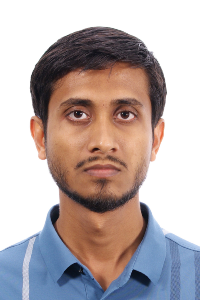
Dr. Md Faysal is a Senior Lecturer and a Graduate Faculty in the Department of Computer Science at Idaho State University, where he joined in Fall 2024. Before joining ISU, he served as a Postdoctoral Researcher in the Department of Computer Science at Texas State University.
He earned his Ph.D. in Computer Science from the University of Nevada, Las Vegas (UNLV) in Fall 2023. His research focuses on parallel and distributed computing, graph algorithms, and high-performance computing (HPC). He earned his M.S. in Computer Science from the University of New Orleans (UNO) in 2020. His doctoral research involved designing parallel and distributed algorithms for information-theoretic community discovery in social and biological networks, developing HPC accelerators for fast hash accumulation, and implementing novel parallel algorithms for k-truss-based goal-oriented community detection.
Dr. Faysal has published multiple peer-reviewed papers and posters in reputable venues, including the IEEE International Conference on Big Data, the IEEE International Parallel and Distributed Processing Symposium (IPDPS), and the International Conference on Parallel Processing (ICPP).
During graduate school, he was a graduate affiliate with the Computer Architecture Group (CAG) at Lawrence Berkeley National Laboratory (LBNL), where he held summer research internships in 2020, 2021, and 2022. He actively contributed to a DOE–NSA collaborative project on software–hardware co-design for future computing systems. His work included performance modeling and validation of large-scale graph and genomics workloads on HPC platforms such as NERSC Perlmutter and Cori, and exploring architectural trade-offs for heterogeneous computing systems.
He earned his B.Sc. in Computer Science and Engineering from the Bangladesh University of Engineering and Technology (BUET) in 2014 and worked as a software engineer from 2014 to 2017 before beginning graduate studies.
Dr. Faysal enjoys teaching core computing courses, including data structures and algorithms, computer programming, machine architecture, and parallel and distributed computing. Since joining ISU, he has taught Computer Science and Programming, Android Programming, and will teach Secure Web Development and Computer Architecture in the upcoming semester.
Outside of academia, he enjoys hiking, long road trips, and playing cricket, badminton, and soccer.