
Department of Anthropology Offers Short Course for Idaho Professionals
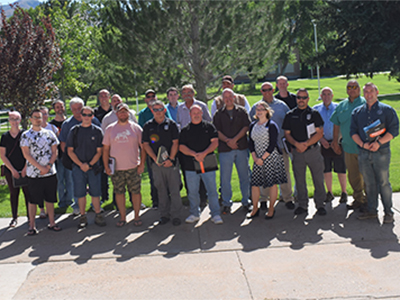
Last month, 18 law enforcement and medicolegal professionals from 11 Idaho counties and 15 different agencies gathered at Idaho State University’s Forensic Anthropology Lab.
The group learned the names and characteristics of human bones as part of the lab’s Short Course in the Identification of Human Versus Non-Human Bone. The course, led by assistant professor Sara Getz, aimed to familiarize participants with the basic skills needed to determine if an item is bone and to differentiate human from non-human remains.
“I personally find this type of professional outreach to be incredibly fun and rewarding,” Getz said. “In one day of instruction, we want participants to leave with practical knowledge and skills that they can immediately begin to put into practice.”
The course also functioned to inform attendees, including coroners, medicolegal death investigators, law enforcement and individuals from Idaho Fish and Game and the U.S. Fish and Wildlife Service, of the resources the Forensic Anthropology Lab provides.
Those services include free and rapid assessments of forensic significance. For example, law enforcement professionals can text or email faculty members, who can determine within minutes whether a sample is bone, whether it is human, and whether it is likely that additional investigation is needed.
Anthropologists in the lab also offer recoveries and analysis in the field, participate in searches and process human remains free of charge. Agencies simply help pay for travel and supply costs whenever possible.
“The course was an overwhelming success,” Getz said. “The majority of the participants had not worked with a forensic anthropologist or the Forensic Anthropology Lab before, but said that they would now call us and recommend our services to others.”
The Department of Anthropology has offered two free short courses in the past, but the Forensic Anthropology Labhopes to ramp up its offerings in the future. Thanks to the positive feedback the lab received, and endorsements by the American Board of Medicolegal Death Investigators, Idaho Peace Office Standards and Training (Idaho POST) and the Idaho State Association of County Coroners, the lab plans to offer three to four courses a year on a variety of topics. Proceeds from the course registration fees will be used to allow the lab to continue to offer free and low cost services for agencies in Idaho.
During this short course, senior lecturer Christian Petersen and three anthropology students served as lab assistants. Not only did the course provide valuable information to its participants, Getz said, it ultimately benefited the members of the lab who participated.
“This type of teaching really challenges me to rethink how to explain concepts and generates new ways of getting students engaged with the material, which is really incredible practice for my regular ISU courses,” she said. “It also reminds us all of the real-world impact of what we do on the communities that we serve.”