
Art chair Naomi Velasquez featured in art exhibitions
Work by Naomi Velasquez, chair of the Department of Art, will be featured in several art exhibitions hosted by West Virginia University, East Central College and the Women’s Fund of Rhode Island.
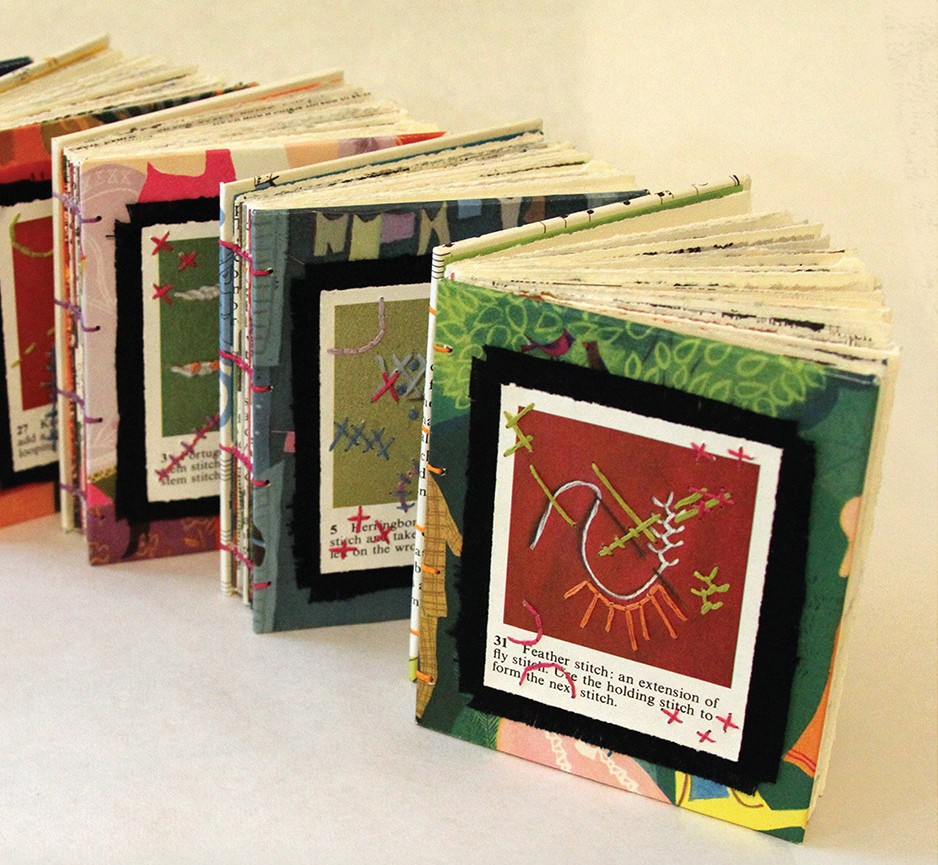
At “Correlation,” a solo exhibition at East Central College in Union, Missouri, Velasquez’ artist’s books will be on display from Oct. 8-30. She will also provide a remote, virtual artist’s talk for the Union, Missouri community.
Velasquez’ work is also included in a national juried exhibition created and hosted by West Virginia University Libraries, “Undefeated: Canvas(s)ing the Politics of Voter Suppression since Women's Suffrage.” The exhibition may be viewed online, and the print exhibit will debut at the WVU Downtown Campus Library in Spring 2021.
“Undefeated” centers on efforts to suppress the votes of women and minorities since 1920 and features submissions from 58 artists and designers worldwide, who all used the template of the campaign button as a canvas. The exhibition commemorates the 100th anniversary of the ratification of the 19th amendment to the U.S. Constitution and the 55th anniversary of the Voting Rights Act of 1965.
“There are so many issues and barriers associated with voting in our country right now, which are just being exacerbated by the pandemic,” Velasquez said. “I was interested in this WVU exhibition because of the focus on the intersection of artwork and graphic design and education about issues with voting access.”
Velasquez hand-embroidered her campaign button, which is stitched with handwritten text drawn on a linen textile. Her piece evokes a long history of political protest expressed through embroidery and quilts, she said.
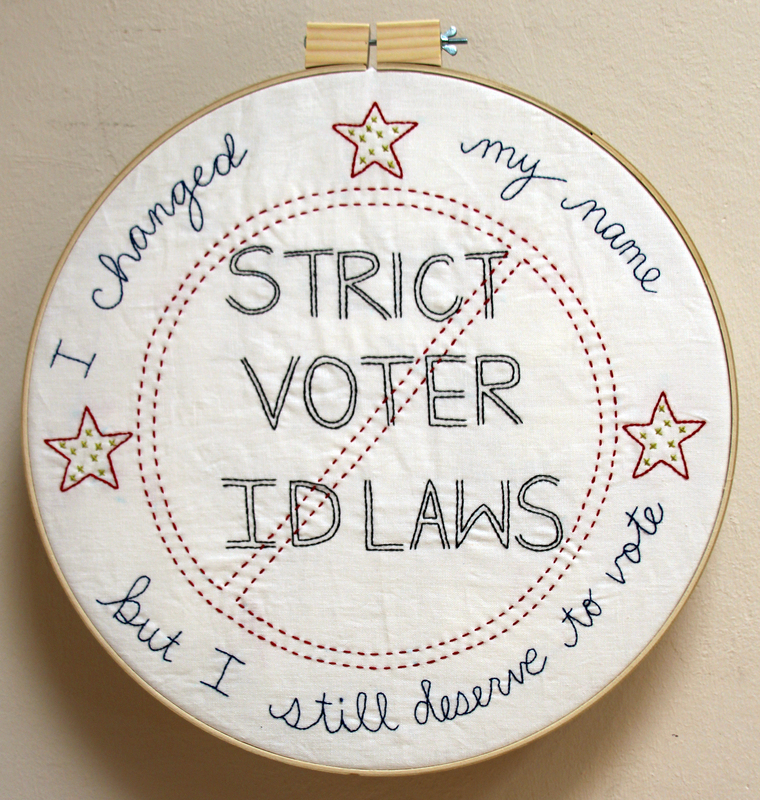
Velasquez’ piece highlights one aspect of voter suppression that impacts women and LGBTQA+ voters — strict voter ID laws that prevent them from voting if they have changed their names.
“There are so many important issues regarding voting rights for women that I decided to drill down and create a button design that would represent an issue that I have experienced,” she said. “I have changed my last name several times in adulthood, so this would be a button I would wear.”
The campaign button piece is now on display at the national juried show “Right to Vote” at the Hera Gallery in Wakefield, Rhode Island. The exhibition invites artists’ perspectives on the continued importance of strengthening voting rights in the United States.