
Budget Feedback Analysis Process & Information
As part of ISU’s FY2026-FY2027 budget planning process, employees across campus were invited to share suggestions and ideas to help the university address its structural deficit and strengthen long-term financial resilience. Feedback was collected through surveys, leadership discussions, and open-ended prompts to ensure broad representation. The goal was to gather respondent input, identify clear patterns, and provide the campus community with an accessible summary of what employees shared.
We used a mixed-methods qualitative approach that balanced automation with manual review. After standardizing all survey and discussion feedback into a single dataset, automated tools helped normalize language and apply initial theme labels. Each of the 2,000+ comments was then manually reviewed to ensure accuracy and assign the most appropriate codes. Many comments addressed multiple topics, so submissions were kept intact and coded for every relevant idea. This preserves the authentic voice of respondents and reflects the true complexity of the feedback. Differences in the number of sub-codes across themes stem from the breadth of the comments themselves, not the coding process.
Budget Feedback Summary: What We Heard From the Campus Community
As part of ISU’s FY2026-FY2027 budget planning process, employees across campus were invited to share suggestions and ideas through a university-wide survey and in-person conversations. Thousands of comments were submitted, reflecting deep engagement and a strong desire to help ISU navigate financial challenges while strengthening its long-term future.
While the individual ideas varied widely, five major themes consistently emerged:
- Structural Redesign
- Strengthening Our Academic Core
- Operational Efficiency
- Investing in People and Performance
- Revenue Growth and Diversification
The summaries below highlight what we heard, using representative themes rather than quoting individual comments. These findings are shared openly to support transparency, trust, and continued dialogue.
Feedback within this theme reflects broad concern about fragmentation, duplication, and the overall cost of ISU’s current organizational structure. Many employees see opportunities to modernize and simplify how ISU is organized—both academically and administratively.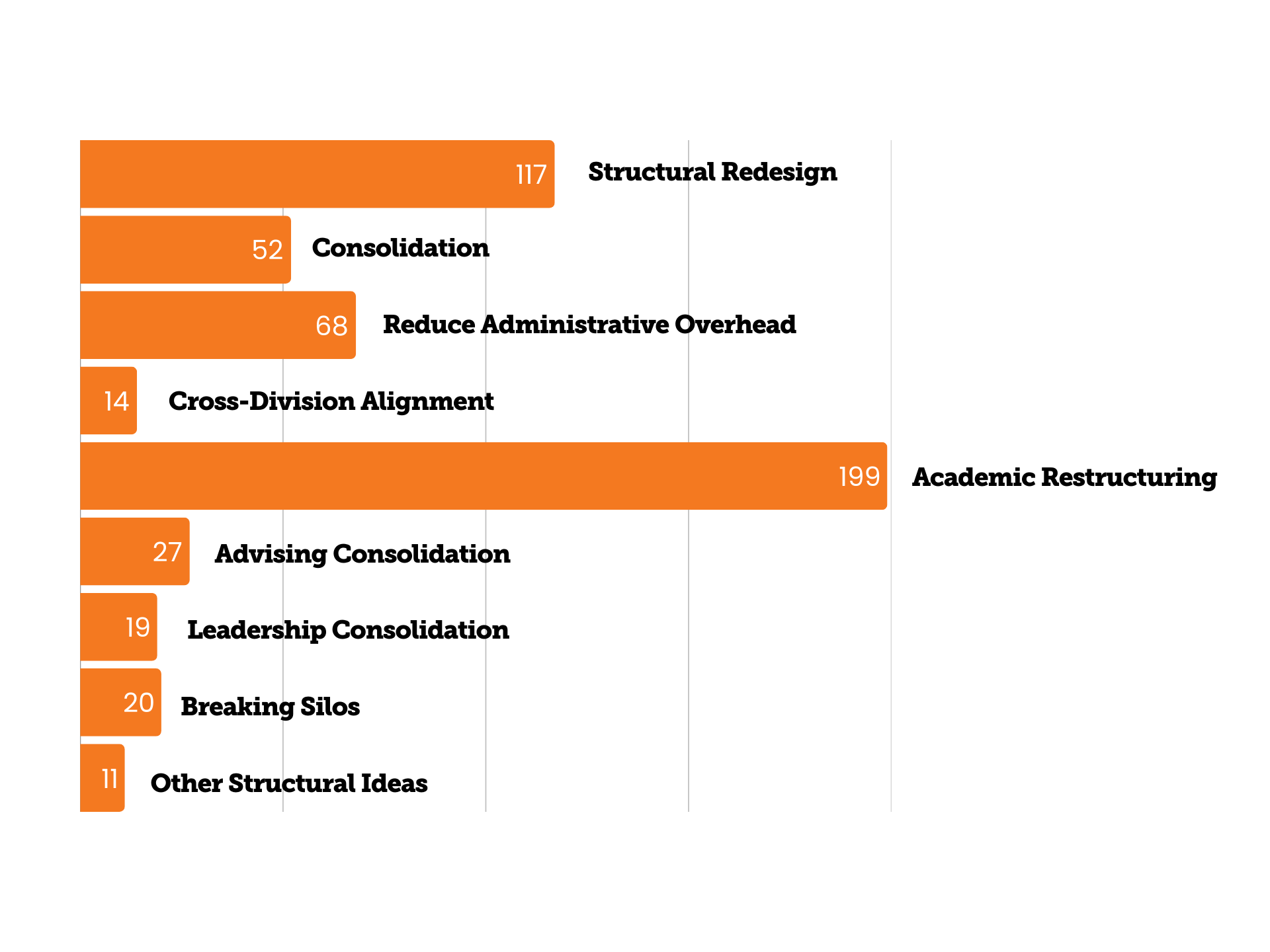
Key Themes We Heard
- Opportunities to Simplify Academic and Administrative Structures (responses mapped to: Structural Redesign, Academic Restructuring). Many respondents suggested exploring ways to streamline colleges, divisions, and administrative layers. Ideas included restructuring or combining units where missions overlap, reevaluating organizational layers, and aligning structures with enrollment, workforce needs, and financial sustainability.
- Reducing Administrative Overhead and Duplicative Roles (responses mapped to: Reduce Administrative Overhead, Leadership Consolidation). A recurring theme was the perception that administrative functions are distributed across too many units. Suggestions included consolidating similar roles, reviewing administrative release time, and strengthening shared services to reduce duplication.
- Aligning Programs and Services to Reduce Redundancy (responses mapped to: Consolidation, Advising Consolidation, Breaking Silos). Respondents identified overlapping programs, clinics, advising models, and student-facing support services across colleges. Many suggested exploring shared services, unified offices, or cross-unit collaboration to increase efficiency and consistency.
- Campus Footprint and Facility Use (responses mapped to: Other Structural Ideas). Numerous comments highlighted opportunities to review ISU’s physical footprint, including underutilized buildings, satellite sites, and specialized facilities. Suggestions included consolidating programs, repurposing existing spaces, and focusing investments on the areas with the highest impact.
- Athletics Structure and Financial Sustainability (responses mapped to: Other Structural Ideas). A range of viewpoints was shared about athletics. Feedback focused on ensuring long-term financial sustainability while maintaining opportunities for student engagement and community connection.
- Improving Workflows, Systems, and Coordination (responses mapped to: Cross-Division Alignment, Structural Redesign). Respondents described inefficiencies created by decentralized processes and systems. Many recommended modernization, standardization, and stronger cross-department coordination.
Overall Takeaway
Respondents broadly agree that ISU’s structure is complex, fragmented, and costly to maintain. There is strong interest in exploring reorganizations, shared services, and more efficient academic and administrative models—pursued thoughtfully and guided by a clear, university-wide strategy.
This theme reflects a deep commitment to ISU’s academic mission and shared interest in strengthening program quality, relevance, and efficiency.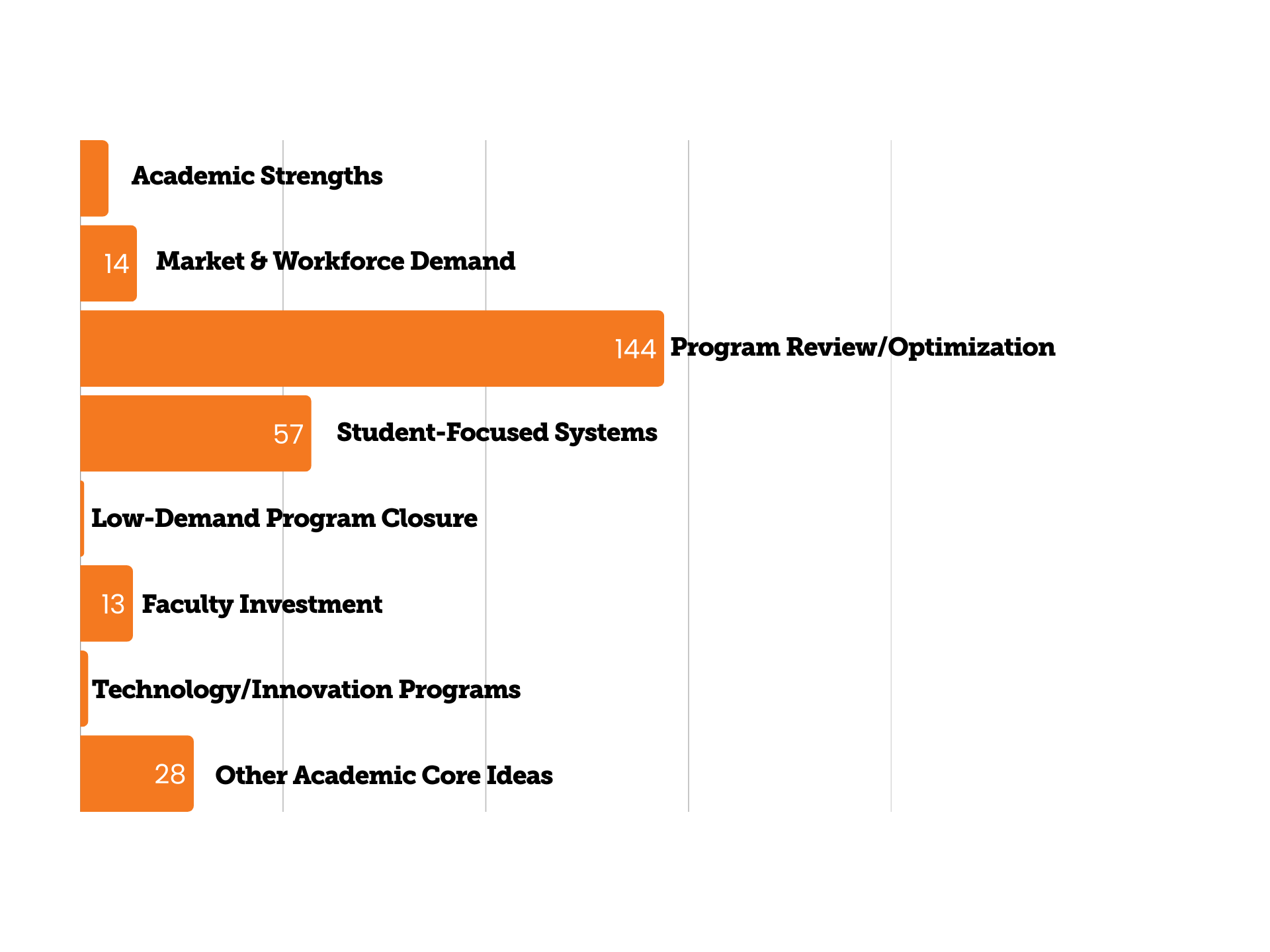
Key Themes We Heard
- Aligning Programs With Workforce Needs and Student Demand (responses mapped to: Market & Workforce Demand, Program Review/Optimization). Respondents encouraged ISU to prioritize programs that clearly lead to strong career opportunities, while reviewing offerings with persistently low enrollment or limited workforce alignment.
- Reducing Academic Duplication (responses mapped to: Program Review/Optimization). Many employees noted that foundational courses are taught in multiple departments, sometimes with similar content. Suggested solutions included consolidating instruction, cross-listing courses, and streamlining curriculum requirements.
- Expanding Online and Flexible Instruction (responses mapped to: Other Academic Core Ideas). Respondents see significant potential in online, hybrid, and flexible learning options—particularly for working adults, rural learners, and out-of-state students—while preserving academic rigor and quality.
- Aligning Teaching Loads and Instructional Models (responses mapped to: Faculty Investment). Feedback highlighted variations in faculty workload expectations and uneven distribution of instructional duties. Respondents suggested reviewing load models, class sizes, and instructional efficiencies.
- Improving Pathways, Advising, and Student Support (responses mapped to: Student-Focused Systems). Many comments focused on making student success systems more coordinated and easier to navigate, particularly for first-year students, transfer students, and those moving from COT to bachelor’s or professional programs.
- Optimizing Use of Campuses and Clinical Spaces (responses mapped to: Student-Focused Systems, Other Academic Core Ideas). There was strong interest in consolidating clinical operations, coordinating placements, and rethinking the distribution of programs across ISU’s geographic locations.
- Modernizing Academic Processes (responses mapped to: Student-Focused Systems). Respondents pointed to outdated or inconsistent academic processes, including scheduling, course planning, and onboarding. They encouraged greater cross-unit coordination and simplification.
- Reevaluating Student Services, Fees, and Scholarship Structures (responses mapped to: Other Academic Core Ideas). Respondents raised interest in reviewing scholarship models, dual-credit programs, athletic fee structures, and student housing/meal plan models to strengthen equity, access, and financial sustainability.
Overall Takeaway
Respondents strongly support refining ISU’s academic portfolio, strengthening student pathways, reducing duplication, and investing strategically in programs with high demand and clear workforce alignment.
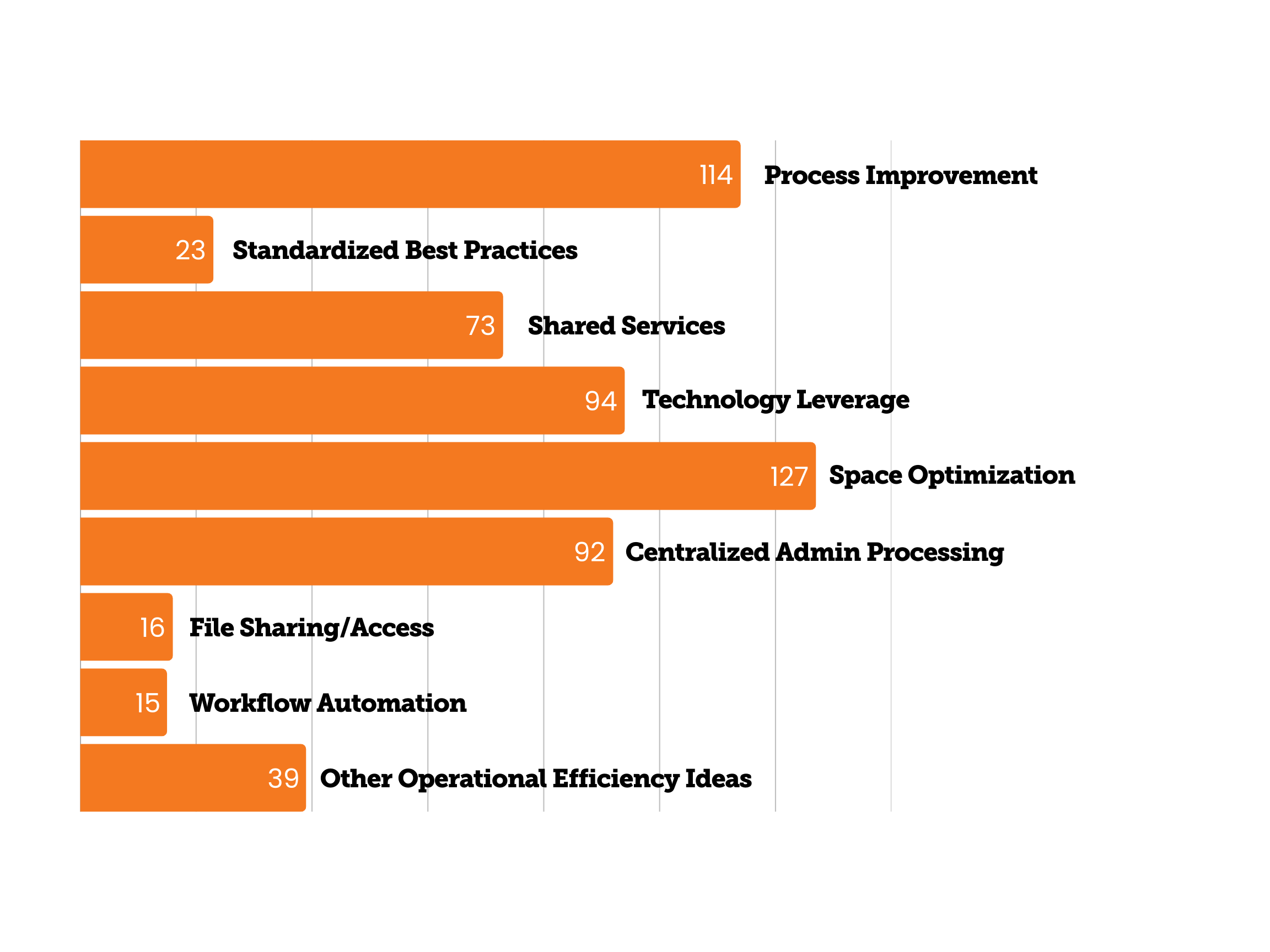
Feedback in this theme reflects a shared belief that ISU’s operations can be simplified, modernized, and aligned to better support students and employees.
Key Themes We Heard
- Centralizing Common Administrative Functions (responses mapped to: Shared Services, Centralized Administrative Processing, Standardized Best Practices, Process Improvement ). Employees emphasized that duplicative or unit-specific processes create confusion and inconsistent service. Suggestions included shared services for finance, HR, IT, advising, marketing, and recruitment.
- Modernizing Systems and Reducing Manual Work (responses mapped to: Process Improvement, Standardized Best Practices, Technology Leverage, Workflow Automation, File Sharing/Access). Many respondents highlighted outdated systems, fragmented tools, and manual processes that slow work down. There was strong support for better integration, automation, and a unified resource hub.
- Coordinating Physical Resources and Equipment (responses mapped to: Space Optimization, Other Operational Efficiency Ideas, Technology Leverage, Process Improvement, File Sharing/Access). Suggestions included centralizing equipment inventories, sharing specialized resources across units, and improving coordination of vehicles, printers, classroom technology, and lab materials.
- Improving Facilities and Operational Workflows (responses mapped to: Process Improvement, Space Optimization, Standardized Best Practices, Workflow Automation, Other Operational Efficiency Ideas). Respondents cited challenges with scheduling, work order prioritization, communication, custodial workloads, and event coordination. Many noted opportunities to streamline and standardize workflows.
- Simplifying Policies and Procedures (responses mapped to: Process Improvement, Standardized Best Practices, Centralizing Administrative Processing). Long approval chains, unclear ownership, and inconsistent documentation were frequently mentioned as barriers to efficient work.
- Using Automation and AI (responses mapped to: Workflow Automation, Technology Leverage). Employees see significant opportunities for automation and AI to reduce redundant administrative tasks and improve consistency.
- Strengthening Cross-Unit Coordination and Culture (responses mapped to: Standardize Best Practices, Process Improvement, File Sharing/Access, Shared Services, Other Operational Efficiency Ideas). Respondents emphasized that cultural and communication barriers—not just systems—contribute to inefficiencies.
Overall Takeaway
There is clear enthusiasm for simplifying and centralizing operations, modernizing systems, and improving coordination. Many employees view operational efficiency as a major opportunity to reduce costs and improve service across campus.
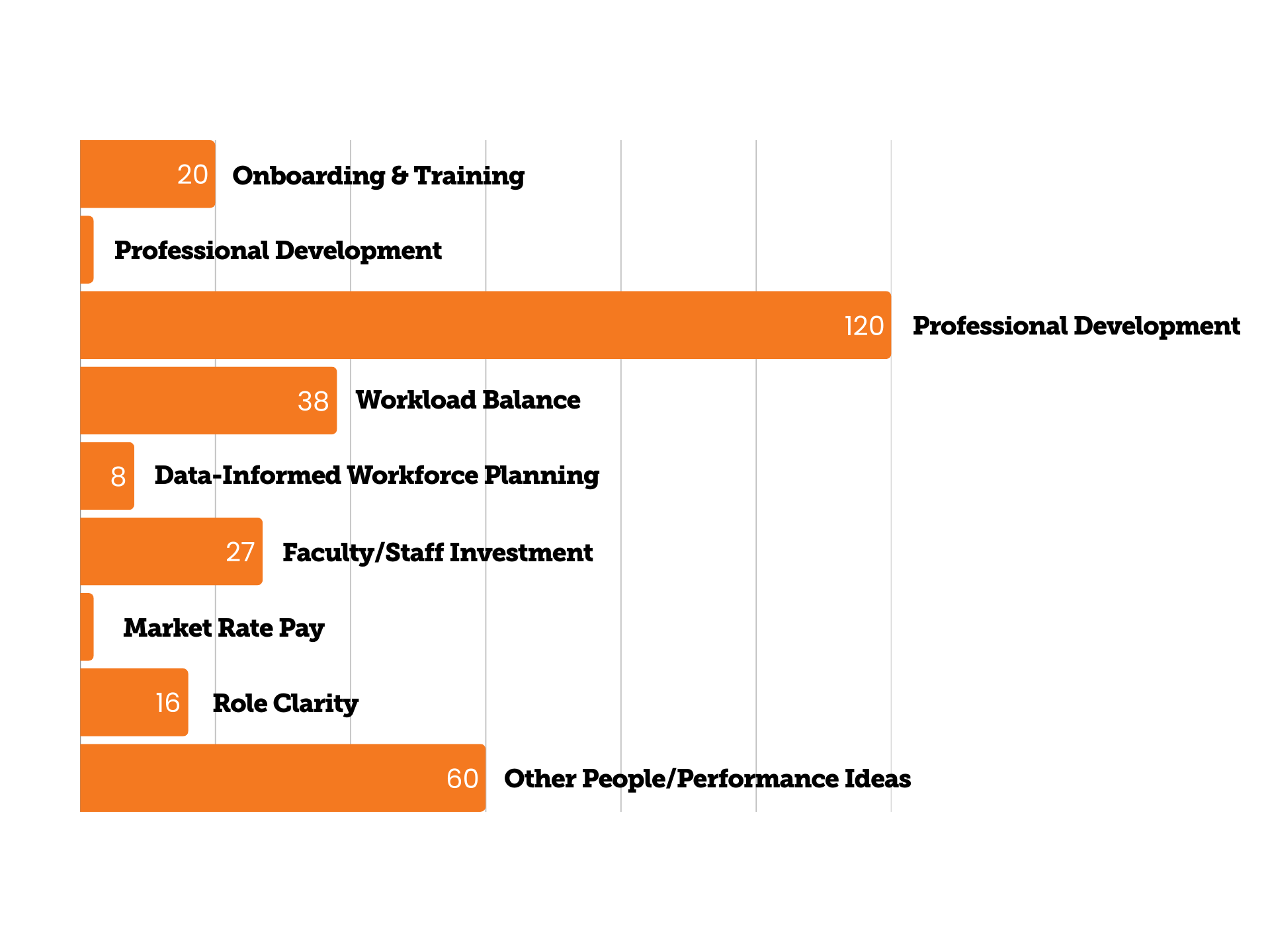
This theme reflects widespread agreement that ISU’s people are its most important asset—and that investing in employees is crucial for long-term success.
Key Themes We Heard
- Compensation and Pay Equity (responses mapped to: Compensation Equity, Market Rate Pay, Faculty/Staff Investment). Compensation was one of the most frequently cited concerns. Respondents emphasized the need for competitive salaries, clearer pay structures, equitable treatment across units, and benefit models that are sustainable for employees and the university.
- Workload, Staffing, and Role Clarity (responses mapped to: Workload Balance, Role Clarity). Many employees described heavy workloads, staffing shortages, role ambiguity, and the impact of turnover. Respondents encouraged clearer job descriptions, realistic staffing models, and equitable workload distribution.
- Professional Development and Training (responses mapped to: Onboarding & Training, Professional Development, Faculty/Staff Investment). Employees expressed strong interest in consistent training, onboarding, technical skill-building, supervisory development, and career pathways.
- Performance Management (responses mapped to: Role Clarity, Workload Balance, Other People/Performance Ideas). Respondents noted variations in performance expectations and evaluation practices, and expressed interest in clearer tools, training, and accountability structures.
- Campus Culture and Belonging (responses mapped to: Faculty/Staff Investment, Other People/Performance Ideas). Many employees described a desire for improved communication, transparency, recognition, collaboration, and trust across units.
- Supervisory Quality and Leadership Support (responses mapped to: Role Clarity, Workload Balance, Other People/Performance Ideas, Faculty/Staff Investment). Supervision quality and consistency were frequently mentioned, along with the need for training and support for managers.
- Flexibility and Work Environment (responses mapped to: Compensation Equity, Other People/Performance Ideas). Employees noted that flexible work arrangements—including hybrid and remote options, 4-day work weeks, and reduced FTE options—along with supportive work environments, play a key role in retention, well-being, and long-term cost management.
Overall Takeaway
Employees overwhelmingly believe that investing in compensation, culture, professional growth, clear expectations, and supervisory quality is essential to retaining talent and supporting ISU’s strategic goals.
While many comments addressed cost containment, a large number focused on strategies to grow revenue and expand ISU’s reach.
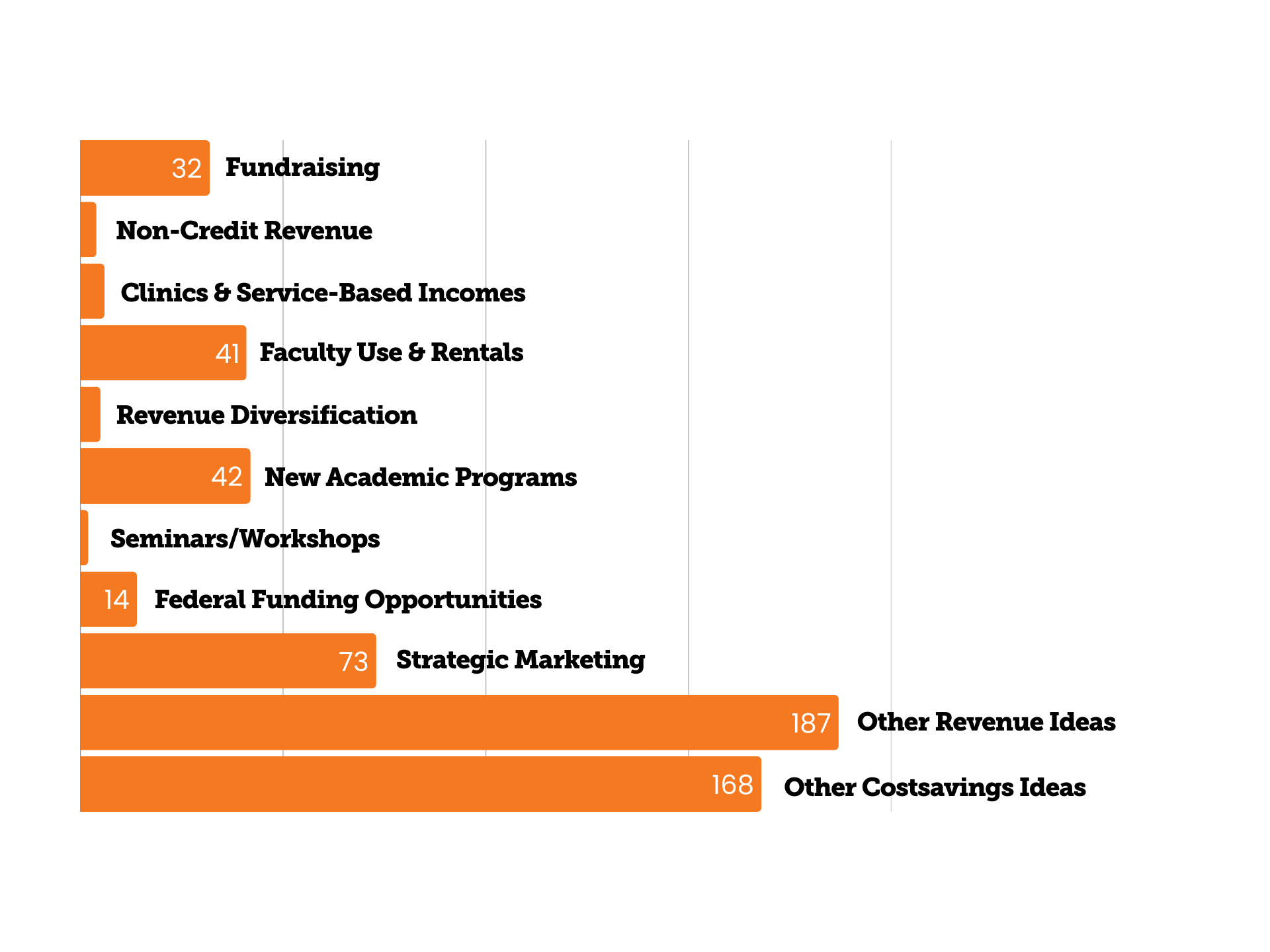
Key Themes We Heard
- Clinical Services and Health Programs (responses mapped to:Clinics & Service-Based Income, Revenue Diversification, Other Revenue Ideas, Other Ideas that would cut costs). Respondents believe ISU’s clinical operations and health programs hold significant potential for growth, improved billing, and expanded service to Idaho communities.
- Program Development and Workforce Alignment (responses mapped to:New Academic Programs, Non-Credit Revenue, Seminars/Workshops, Revenue Diversification, Federal Funding Opportunities, Other Revenue Ideas). Suggestions emphasized investing in high-demand and emerging fields, expanding non-credit and workforce training, and strengthening COT-to-bachelor’s pathways.
- Recruitment and Retention Strategy (responses mapped to:Strategic Marketing, Revenue Diversification, New Academic Programs, Other Revenue Ideas). Many comments focused on improving coordination and communication across recruitment, admissions, advising, and retention functions.
- Athletics, Events, and Community Engagement (responses mapped to: Facility Use & Rentals, Strategic Marketing, Revenue Diversification, Other Revenue Ideas). Respondents see opportunities for increased sponsorships, community events, and partnerships that strengthen ISU’s presence and visibility.
- Facilities and Space Strategy (responses mapped to:Facility Use & Rentals, Other Revenue Ideas, Other Ideas that would cut costs). Feedback included suggestions to lease, repurpose, or modernize underutilized spaces, and to optimize classroom and facility usage.
- External Funding and Research Partnerships (responses mapped to: Federal Funding Opportunities, Clinics & Service-Based Income, Revenue Diversification, Other Revenue Ideas). Respondents encouraged expanding strategic partnerships, supporting grant development, and reducing administrative barriers to collaborative research.
- Marketing and Institutional Visibility (responses mapped to: Strategic Marketing, Revenue Diversification, Federal Funding Opportunities, Other Revenue Ideas). Many emphasized the need for unified branding, strong digital marketing, and better promotion of ISU’s strengths.
- Online Education and Micro-Credentials (responses mapped to: Non-Credit Revenue, Seminars/Workshops, New Academic Programs, Revenue Diversification). There was strong support for expanding online programs, short-term certificates, and employer-aligned training.
- Philanthropy and Donor Engagement (responses mapped to: Fundraising, Revenue Diversification, Other Revenue Ideas). Respondents highlighted opportunities to strengthen alumni engagement, donor communication, and strategic fundraising.
Overall Takeaway
Respondents see revenue growth as essential to ISU’s future. They emphasized that long-term financial sustainability must pair cost management with investment in programs, services, and partnerships that strengthen enrollment and expand ISU’s reach.
Next Steps
These summaries represent the themes most frequently mentioned by employees across thousands of comments. They reflect a community that cares deeply about ISU’s future and is committed to working collaboratively toward solutions.
The next phase of the budget planning process will focus on:
- further analyzing these themes,
- developing strategies aligned with ISU’s mission and values, and
- communicating updates regularly to the campus community.
ISU is grateful to everyone who took the time to share their ideas. Your feedback is helping shape the path forward.