
New Findings Show Ancient Intermountain West was Once Covered in Sea Sponges
November 13, 2025
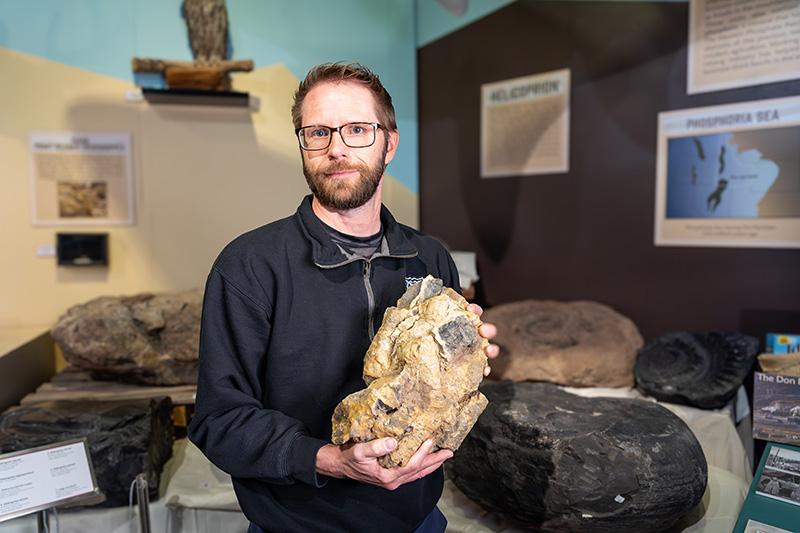
While they didn’t live in a pineapple under the Phosphoria Sea, it turns out a good chunk of the prehistoric Intermountain West was once blanketed in sea sponges.
“It was like this part of the world was taken over by sponges,” said Leif Tapanila, director of the Idaho Museum of Natural History and professor of geosciences at Idaho State University. “If you were snorkeling, all you’d see would be a meadow of billions of tube-shaped sponges that went off into the distance.”
In a new paper published in PLOS One, Tapanila and his co-authors point to tube-shaped chert, a type of quartz, found at dozens of sites across the West and forming a vast, nearly 400-mile horseshoe spanning from the northeast corner of Nevada, through northern Utah, up through western Wyoming and eastern Idaho to southwest Montana. It’s not the chert they were interested in so much as it’s what the chert contains: spicules.
“Spicules are tiny pieces of glass that sponges–and only sponges–make to form their skeleton,” explains Tapanila. “To us, that supports the idea that this part of the Phosphoria Sea was covered in sponges.”
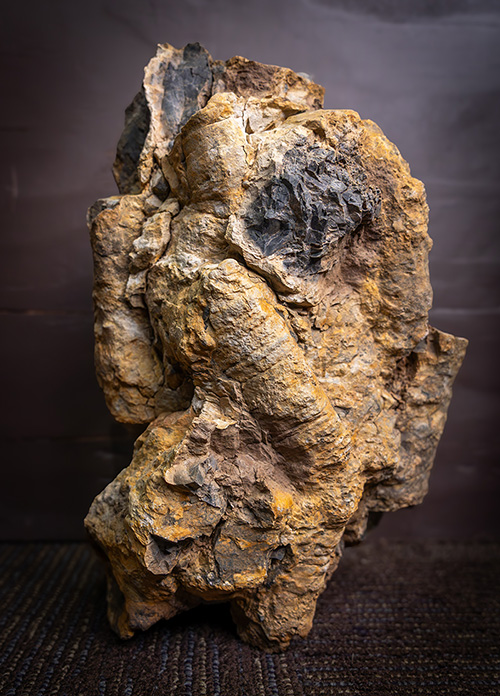
The Phosphoria Sea was an ancient body of water located off the west coast of prehistoric North America, existing approximately 275 million years ago. Today, its geological remnants in East Idaho host phosphate mines for fertilizer. Going back to the 1950s and 1960s, when geologists were searching for new sources of phosphate ore, they discovered tube-shaped chunks of chert. Some paleontologists thought they could be the remnants of fossilized burrows from an extinct animal, or attributed them to an unknown origin.
“Looking back at the old scientific papers, it was hidden in plain sight; they didn’t know what they had,” said Tapanila.
The new findings reveal more about the largest ecosystem of its kind, helping to paint a clearer picture of life in the Phosphoria Sea, which included the largest giant buzzsaw shark, Helicoprion, along with nautiloids, a group of shell-wearing squid, and, at times, abundant filter-feeding sponges, says Tapanila.
“It's really one of the most remarkable ecosystems in the history of North America,” said Tapanila. “The richness and complexity in the ecosystem of the Phosphoria Sea were off the charts.”
Co-authors on the PLOS One-published paper, “Glass factory found: Basinwide (600 km) preservation of sponges on the Phosphoria glass ramp, Permian, U.S.A.,” are Zackery Wistort, postdoctoral researcher at Florida Atlantic Harbor Branch Oceanographic Institute; William Moynihan, staff geologist at TRC Companies, Inc.; and Kathleen Ritterbush, associate professor at the University of Utah.
For more information on the ISU Department of Geosciences and Idaho Museum of Natural History, visit isu.edu/geosciences and isu.edu/imnh.
Categories: