
Loop the Loop
Brief Description
This demonstration is a classic application of centripetal force and the conservation of energy. For an object to successfully complete the vertical circle without falling, it must maintain a minimum "critical velocity" at the highest point of the loop. At this peak, both gravity (mg) and the normal force (N) from the track point downward, providing the necessary centripetal acceleration (ac =v2/r). To find the minimum speed required to stay in contact with the track, we set the normal force to zero, resulting in vmin =gr. In a frictionless scenario, this speed is achieved by releasing the object from an initial height (h) on a starting ramp. By applying the conservation of mechanical energy (mgh=21mv2+mg(2r)), it can be shown that the release height must be at least 2.5 times the radius of the loop (h=25r) to ensure the object clears the top.
Materials
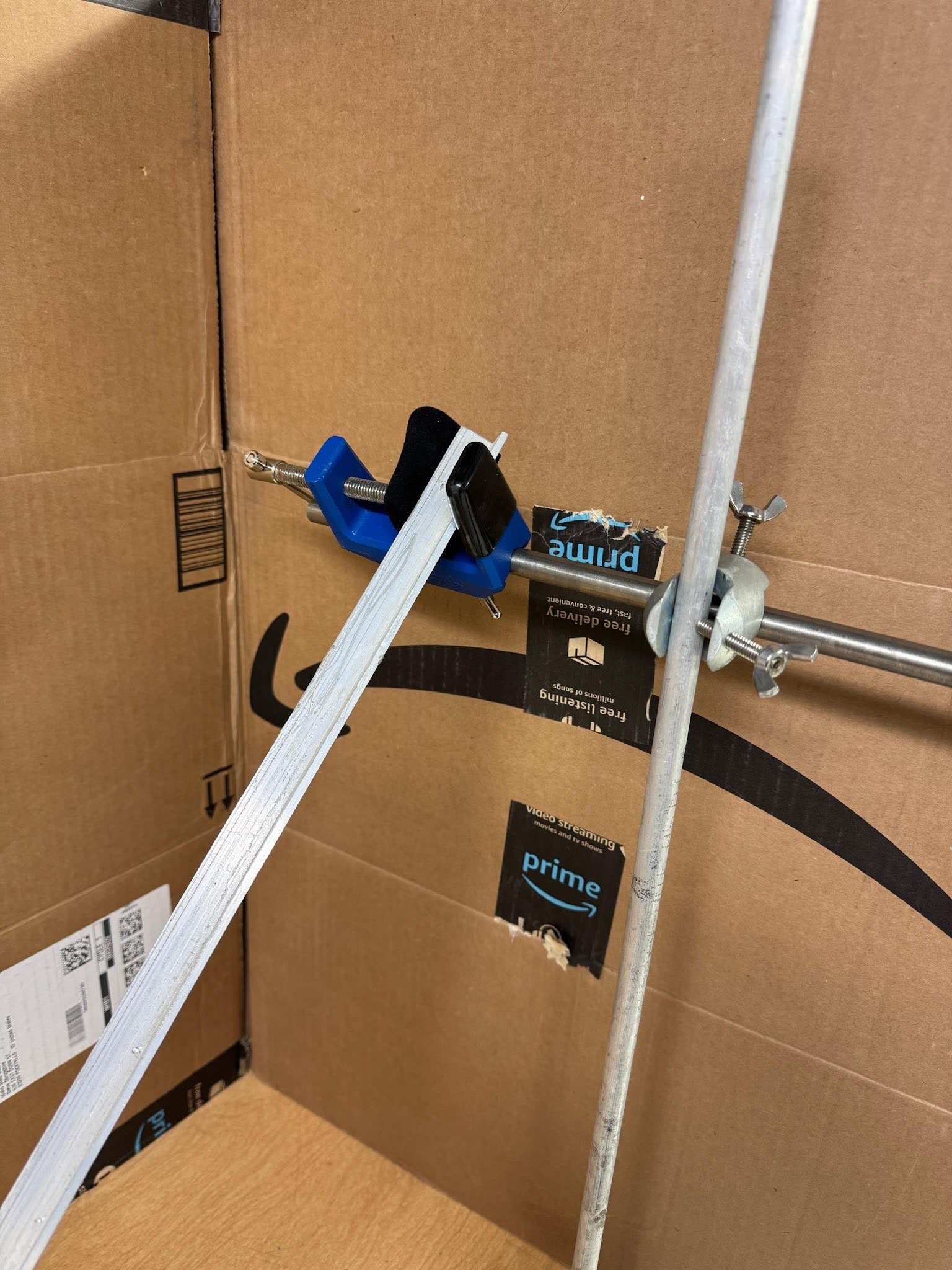
5 smalls rods (from 30-45 cm), 4 medium rods (from 60-100cm), 4 table clamps (any will due), 3 blue table clamps, 8 90° clamps, the loop the loop, and some mouse balls.
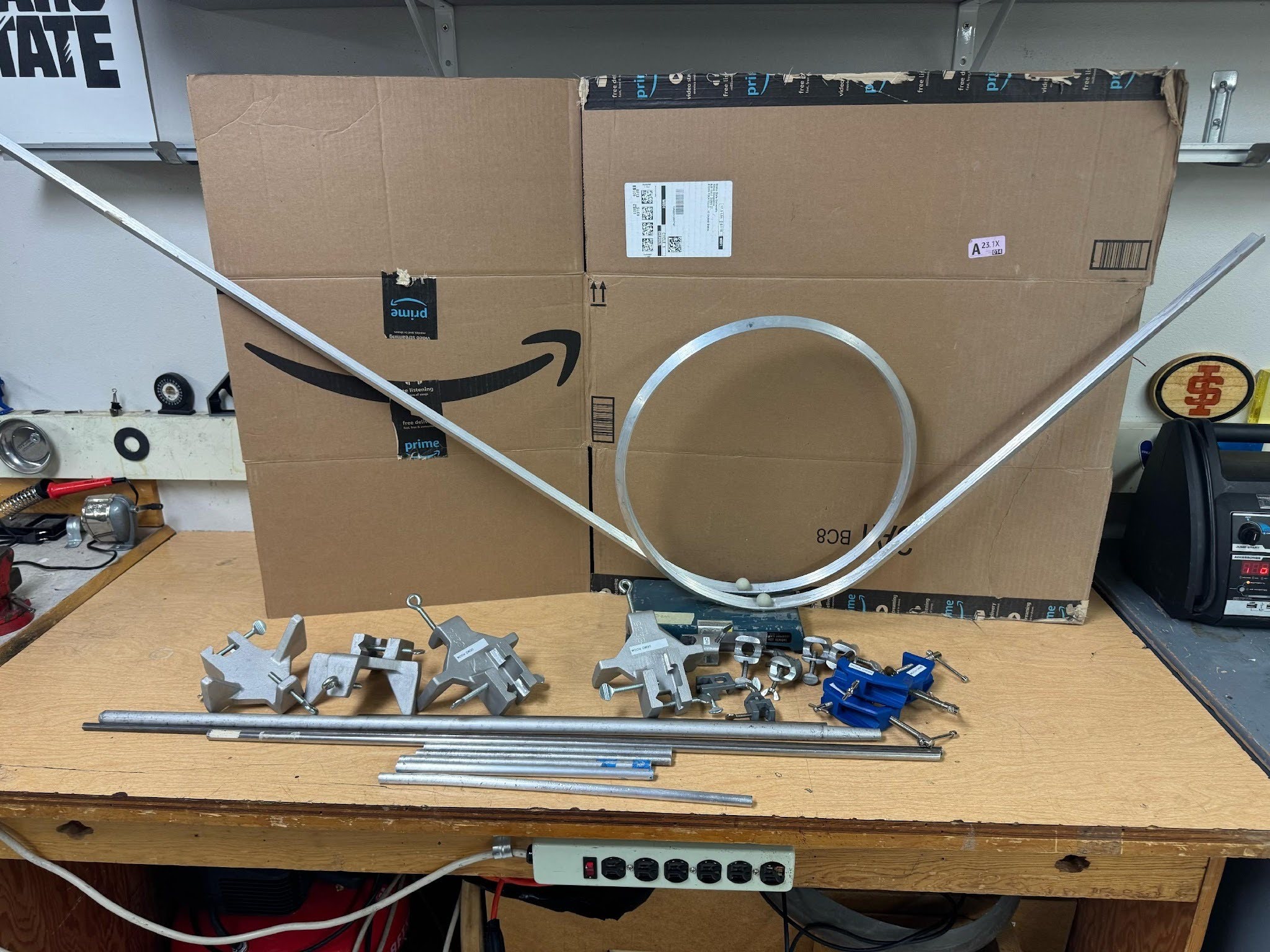
Set-up
In order to minimize the vibrations of the loop as the ball rolls down the track a few support structures need to be built. This will be built using the table clamps rods, rods, and 90°
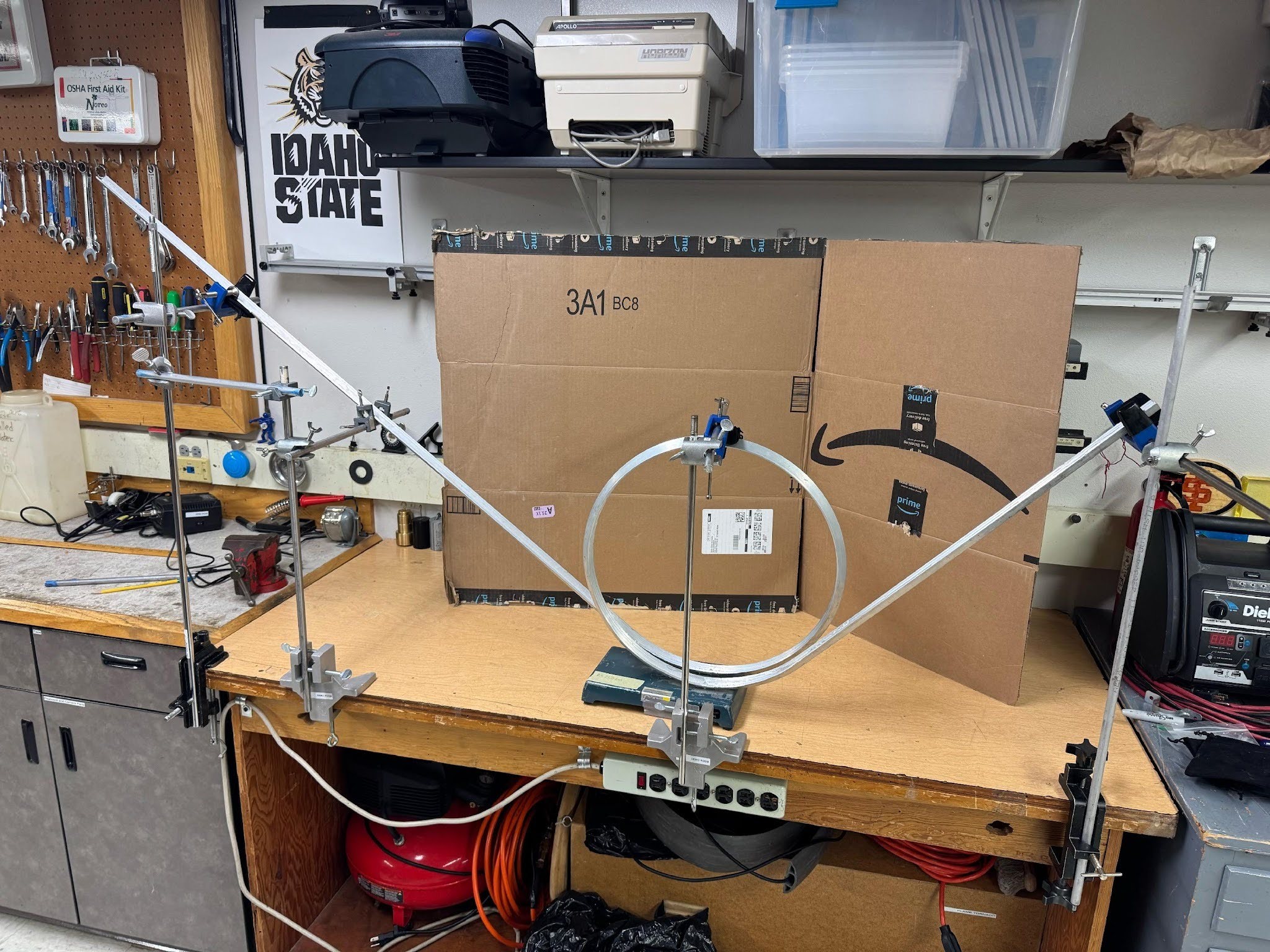
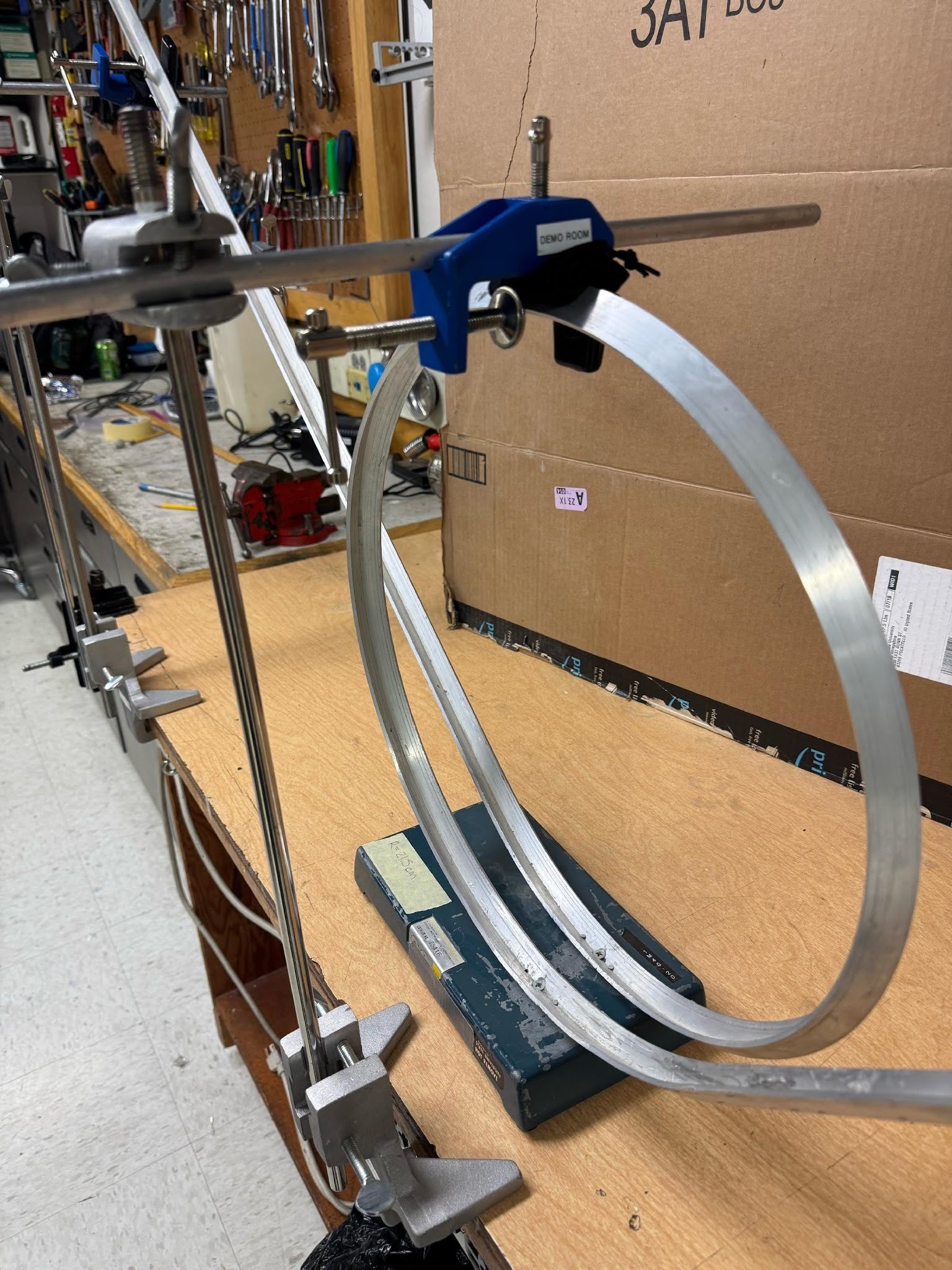
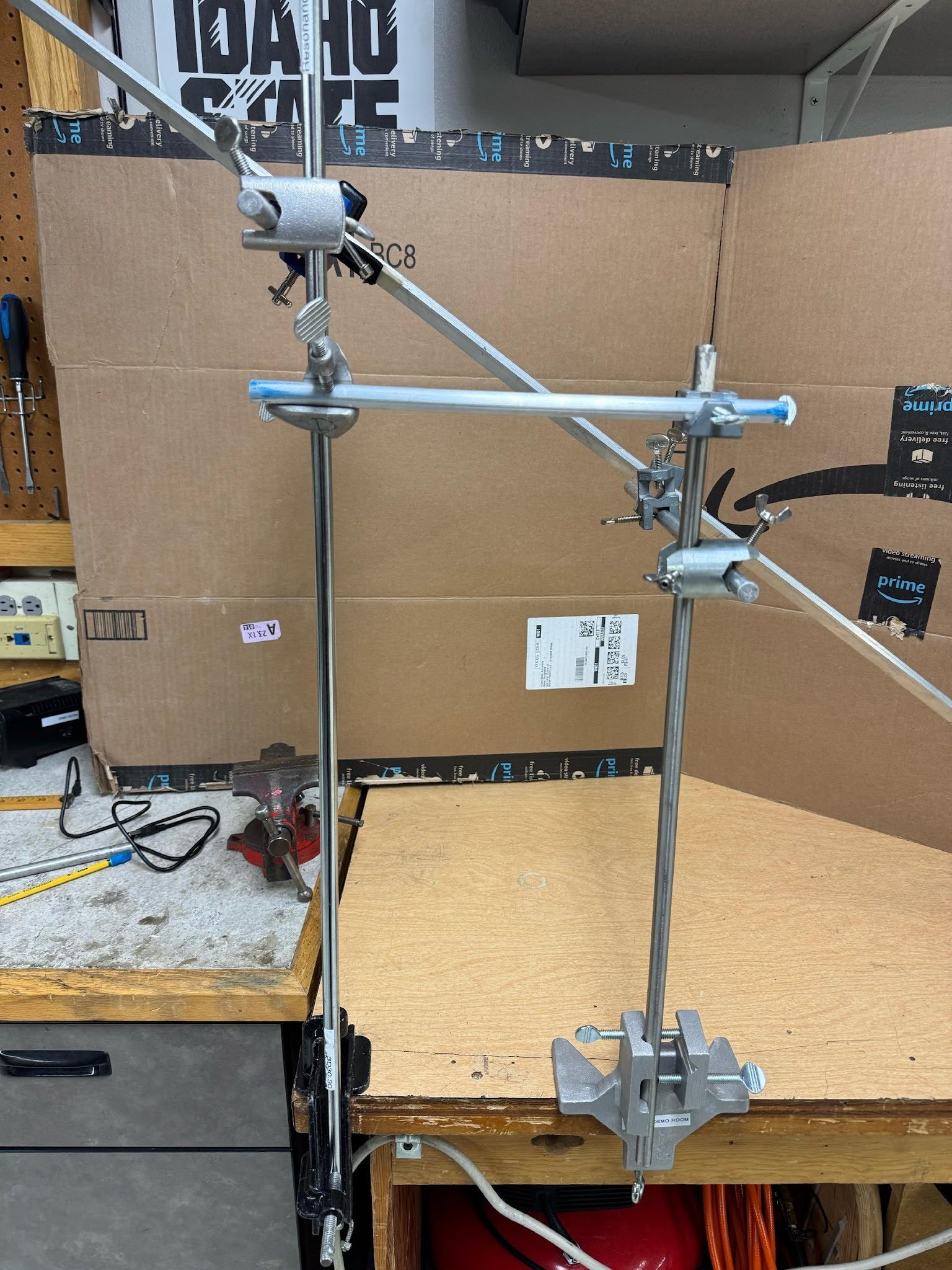
Performing the Demo
Ask the students if the ball will make it around loop from a given height, and roll the ball to see if it does. Ask the students about the energy of the system.