
ISU Researchers Looking Into Foundations of Autoimmune Disease Development, May Yield New Treatments
October 5, 2026
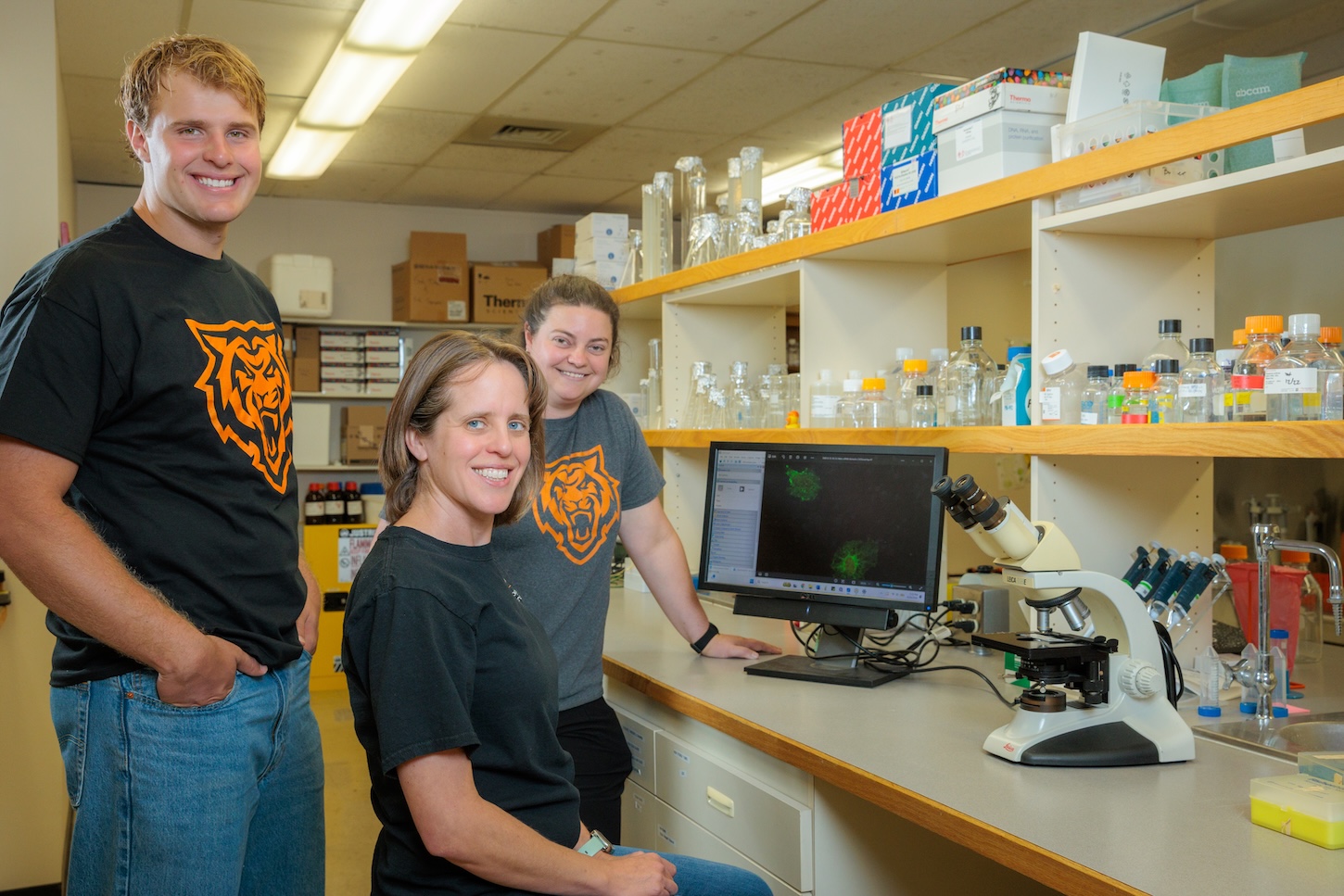
We’ve all heard their names: multiple sclerosis, Type 1 diabetes, Crohn’s disease, psoriasis, rheumatoid arthritis, lupus, to name a handful. Now, an Idaho State University biologist and her students are exploring new ways to fight the autoimmune diseases afflicting millions.
“Normally, our immune system makes antibodies that target pathogens for destruction,” said Kinta Serve, associate professor at ISU. “These antibodies recognize specific pathogen molecules, like bacterial proteins, while ignoring our own host molecules. In contrast, autoimmune diseases occur when the immune system creates autoantibodies that mistakenly identify and target our own host molecules for destruction, leading to cell and tissue damage and the symptoms associated with autoimmune diseases, such as pain.”
Serve is an immunotoxicology expert, and her research examines how exposure to environmental toxins, specifically asbestos, can wreak havoc on our immune systems. Asbestos is a naturally occurring mineral that was once used in everything from building materials to brake pads, and exposure to asbestos fibers is best known for causing chronic, often fatal, diseases like lung cancer, mesothelioma, and asbestosis. Previously, research by Serve and others found that exposure to Libby Asbestiform Amphibole, a specific type of asbestos that was mined in Libby, Montana, led to elevated levels of autoantibodies. In 2024, Serve, along with Brian Cherrington, associate professor at the University of Wyoming, sought to understand how exposure to the Libby Asbestiform Amphibole changes proteins–substances that form the building blocks of all living things–in the body.
“There are two ways a protein can be modified,” explains Serve. “First, changing the genetic code–the DNA–will lead to changes in the protein. Second, a change in the chemical groups, which means the atoms in the protein are ‘swapped out’ for different atoms after it is made, and this results in no genetic changes and may occur following exposure to different toxins.”
Serve continues, “When the chemical groups in proteins change, it can affect the way proteins function, and may even make these newly changed proteins targets of the immune system. One current theory on why autoimmune disease may develop is that the proteins get altered and then the immune system starts to see them as new or foreign proteins instead of normal host proteins, and attacks the proteins.”
Her work with Cherrington identified about a dozen proteins altered after asbestos exposure. Now, building on previous work, Serve and her students are homing in on how protein changes may contribute to the development of autoimmune disease following exposure, thanks to a grant from the National Institutes of Health’s National Institute of Allergy and Infectious Diseases.
“We want to try to determine how proteins are modified, what happens to protein function after modification, and if these modified proteins are targets of the immune system,” said Serve. “The overall goal is to try and understand how protein modification contributes to autoimmune disease, specifically with Libby Amphibole Asbestos as a model for other autoimmune responses arising from environmental exposures.”
“Working on this project became deeply personal for me this summer after connecting with an elderly couple in my neighborhood who happened to have lived in Libby, Montana,” said Mason Mickelsen, a senior majoring in biomedical science from Pocatello, Idaho. “Hearing about the friends they’ve lost and the daily struggles faced by those affected showed me the real-life magnitude of what our lab is working to solve. It’s easy to lose perspective behind laboratory doors, but knowing this work could change lives has kept me focused and humbled."
In the United States, over 15 million people in the U.S. have an autoimmune disease, according to a December 2024 paper in The Journal of Clinical Investigation. That’s roughly 1 in 20 Americans and, in total, more than the entire population of Pennsylvania. The study also found that two out of three of those diagnosed with an autoimmune disease are women.
“We are hoping that by understanding the molecular changes and immune responses to asbestos, we can better understand how environmental exposures drive autoimmunity in general,” said Serve. “Once the mechanisms of autoimmune disease are better understood, we may be able to identify ways to prevent or slow disease development.”
“There is still so much we don't understand about autoimmune diseases, but we all know people who are dealing with them,” said Larisa McOmber, a graduate student who’s earning her master's degree in biology from Preston, Idaho. “That makes this research incredibly rewarding for me to be a part of because the answers we find are going to be impactful for so many people, including individuals that each of us know and care about. It's exciting to help improve our understanding of something that will have far-reaching impacts, but that is also meaningful to people that I interact with every day in the community.”
For more information on Idaho State University’s Department of Biological Sciences, visit isu.edu/biology.
Prospective students can book a campus tour at isu.edu/visit.
Categories: