
Civil Engineering Leading Multi-University Study to Strengthen Idaho's Bridges
September 10, 2026
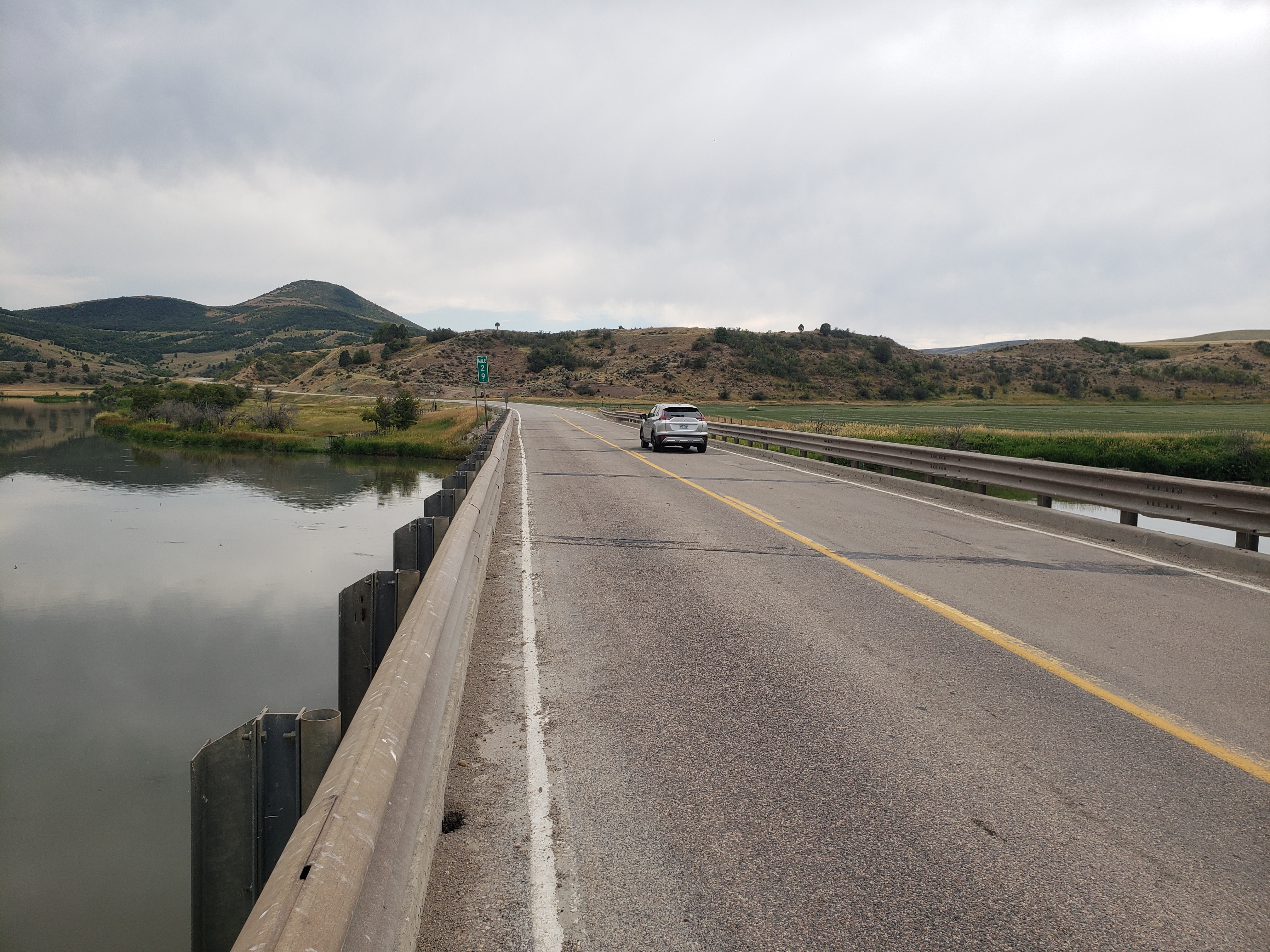
Every winter, Idaho's bridges face a relentless assault. Freeze-and-thaw cycles crack concrete, and deicing salts corrode steel. Beneath the surface, water and chemicals quietly eat away at the reinforcement holding it all together. Now, ISU researchers are leading a team that’s working to find a way to fend off the worst of what humans and Mother Nature can throw at these structures.
An expert research team from ISU, East Texas A&M University, Boise State University, Kennesaw State University, and the bridge engineering firm Marx & Arndt Engineering, LLC, will be taking a three-year look at how to help the Idaho Transportation Department protect its hundreds of bridge decks. The deck of a bridge is the surface that pedestrians and vehicles move across.
"Bridge decks are among the most wear-prone parts of our infrastructure. They bear the full weight of traffic while being constantly exposed to the elements such as moisture, chemicals, and temperature extremes that work together to break down the deck materials over time," said East Texas A&M University’s Mustafa Mashal, who serves as principal investigator on the project.
“Not only does the rehabilitation of concrete bridge decks require a substantial part of ITD’s bridge preservation budget, but every time ITD needs to perform a bridge deck rehabilitation project, the traveling public is impacted greatly since the deck is literally the component where the rubber meets the road for all bridge travelers,” said Darren LaMay, technical engineer 2 at ITD’s Bridge Design Office. “As a result, making the best decisions during design by gaining a better understanding of bridge deck performance through research will benefit everybody.”
ITD currently uses a specialized concrete coating called Polyester Polymer Concrete to protect bridge decks. While PPC has worked relatively well, researchers will compare PPC with a range of other materials to see how they hold up under Idaho conditions. Options to be tested include Ultra-High Performance Concrete, latex-modified concrete, fiber-reinforced overlays that resist cracking, and more. Researchers will run the materials through conditions that mimic Idaho winters and measure how well each one bonds to the bridge deck, resists water and chemical intrusion, and holds up over time. The testing will take place at ISU’s Structural Laboratory, the largest facility of its kind in Idaho.
“We’re not testing materials in a vacuum,” said Jared Cantrell, lead researcher. “Every test is designed to reflect what these materials actually face on Idaho roads, including the temperature swings, repeated freezing and thawing, salt exposure, and simulated traffic wear.”
Field visits to existing ITD bridges will give researchers firsthand insight into how current overlays have aged under real-world conditions. Tadesse Wakjira, assistant professor at Kennesaw State University, will use machine learning tools to build predictive models showing how each material is likely to perform over time. Hongrak Pak, who joined Boise State University as an assistant professor in civil engineering in August 2026, brings expertise in data-driven structural analysis and AI-based resilience tools developed through his research at Texas A&M University.
Rounding out the team is Elmer Marx, principal of Marx & Arndt Engineering, LLC. His firm’s applied engineering perspective will help ensure the project’s recommendations translate cleanly from research into practice. All of the information will feed into a practical decision guide for ITD, helping engineers choose the right overlay for the right bridge based on location, traffic, and climate.
“Our goal is to give ITD a practical, research-backed guide tailored to Idaho’s actual conditions,” Mashal said.
“We want ITD engineers to be able to look at a bridge, consider the local conditions, and have a clear, confident answer for which approach makes the most sense,” said Wakjira.
Funded through a $183,139 grant through ITD’s Research Program, the project is anticipated to take three years and builds on a long-standing partnership between ISU and ITD. ISU researchers have completed several bridge-related projects for ITD over the years, with findings incorporated into Idaho’s infrastructure, such as the precast pier system recently implemented at the Fort Hall Interchange Bridge over I-15 in Southeast Idaho. The second phase of that research project earned an AASHTO High Value Research Award, one of the highest national recognitions for transportation research.
For more information on Idaho State University’s Department of Civil and Environmental Engineering, visit isu.edu/cee.
Categories: