
When Jeffrey Francom, D.M.A., director of choral activities at Idaho State University, walks into the Pocatello Women’s Correctional Facility (PWCC) each week, he doesn’t just carry sheet music, he brings hope, healing, and the promise of transformation.
Francom has been leading a newly formed choir at PWCC. The effort is part of a growing tradition at ISU of engaging students in life-changing community experiences and it is the first time ISU’s director of choral activities has led a choir at PWCC.
“This is one of the most incredible experiences I’ve had as a teacher,” Francom says. “Prison residents come to rehearsal carrying all of their burdens, and as we sing, those burdens are forgotten.” He adds, “What greater influence can you have than being in front of a group of singers, directing music that is inspiring and life-changing for both singers and listeners?”
Several residents described the experience as exciting, rewarding, and even wishing rehearsals could last longer. They value the chance to share their talents and the opportunity to learn music in a supportive, creative space.

Prison resident Rawnie says, “It’s awesome to share this positive release through music!” Even while they are incarcerated, sharing music through singing has been a way to experience a type of freedom. Prison resident Tamika shared, “It is an empowering freedom to be able to use my voice again.”
It’s not just the residents’ lives that are impacted by this work. Camerata choir member Connie Bajerski says, “I wanted to do whatever I could to enable other women to lift their voices and spirits in song. The participants were engaged, curious, and appreciative–and many of them, very talented! It was a lot of fun for everyone involved, and hopefully provided some solace.”
Camerata choir member Debbie Ronneburg joined the Camerata Singers after her husband passed away in hopes that the music would bring healing and renewal. Not only has she found solace in the musical experience at the prison, but she has noticed the impact on the other participants: “In that hour of music, they pour out their souls — expressing themselves through every word and note. They sing with such honesty and heart that the room often fills with emotion, sometimes even tears.”
The ensemble performs pieces of hope and unity. “Everything we’re singing is about joy, light, and healing,” Francom said. “You can see it in their eyes, the transformation that happens when they sing.”
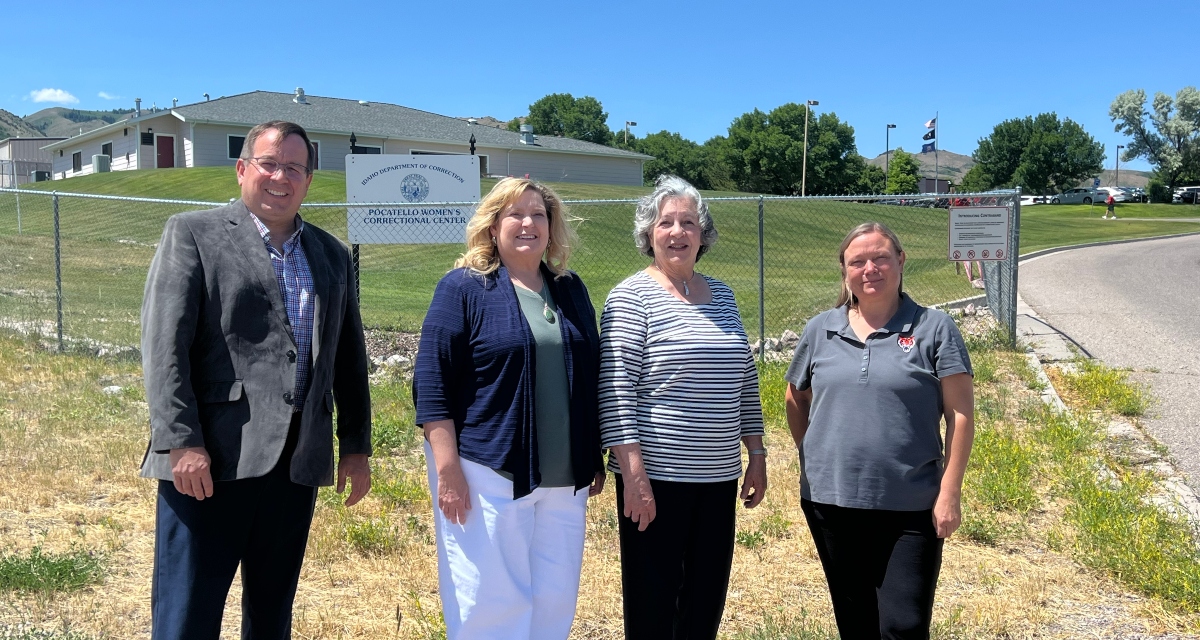
ISU student Amiah Heath conducted the prison choir’s first performance in May. Heath says she was deeply moved by the experience: “I just drove home crying,” she said. “That room was so full of light and love. I’m so honored to work with Dr. Francom and these women on something that means so much to me.” With dreams of becoming a music educator, Heath hopes to create the same type of safe space for her own students one day.
“That room was so full of light and love. I’m so honored to work with Dr. Francom and these women on something that means so much to me.”
Amiah Heath
Idaho State University Student
Francom hopes the choir will be long-term. With campus funding, a full-time student conductor is expected to be assigned to PWCC this fall. Residents have been told they’re welcome to join ISU’s Camerata Singers once they’re released and the choir board has already agreed to waive fees for any women transitioning from the prison.
“I feel so much love for the residents. Each one of them is so unique, and I’m getting to know their personalities just like I do with my students on campus,” Francom said. “Music really is a great equalizer.”
For Francom, some of the most transformative moments happen inside that prison room, where he says “the music takes over and life’s burdens fall away.”
“Everybody should learn to sing,” he says, “because singing has a way of reminding us who we are, no matter where we are.”