Strategic Re-Investment Funding Structure:
A Revenue Generating Recoverable Cycle, for Sustainable Continued Access.
The Center for Accessibility, Leadership and Innovation is built to scale impact responsibly. Our funding structure supports both mission-driven growth and long-term sustainability. This allows accessibility solution expansion beyond a single program, campus, or moment in time.
Every funding stream supports ONE outcome.
Expanding access through sustainable systems.
What Does Cost Recovery Mean?
Cost-recovery means, revenue generated through the Center Resources support the ongoing development, delivery, and improvement of accessibility solutions. This reduces dependence on one-time funding and increasing long-term stability.
Strategic Partners Fuel the Cycle.
The Center's partners are not external to the work. They strengthen the leadership structure and directly shape what we build. Through sponsorship, co-development, implementation support, and shared outcomes, partners help accelerate impact and expand reach.
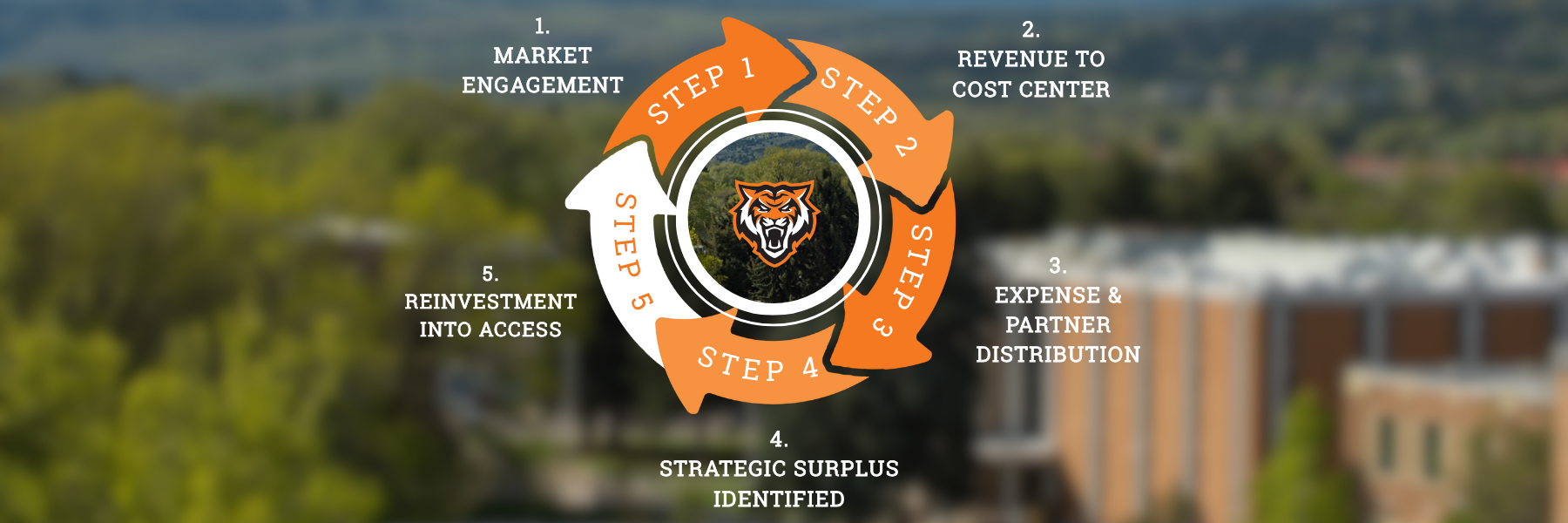
Our Revenue Re-Investment Cycle
This continuous cycle ensures sustainability, accountability, and growth allowing each initiative to fuel the next advancement in access and inclusive leadership.
The Center operates as a strategic cost-recovery model designed to reinvest revenue directly back into accessibility innovation and impact. Through market engagement (including trainings, certifications, consulting, events, and downloadable resources) revenue is generated and processed through institutional accounting. Program costs and ROI partner distributions are allocated first, ensuring responsible financial stewardship. All strategic surplus is then identified and reinvested into new programs, research initiatives, scholarships, and expanded accessibility solutions.
Step 01: Market Engagement
The center engages with external and internal markets through trainings, certifications, consulting services, events, research initiatives, and downloadable resources. These offerings are designed to expand access while generating sustainable revenue that fuels continued innovation.
Step 02: Revenue to Cost Center
All earned revenue is processed through institutional accounting and directed to the centers designated cost center. This ensures compliance, transparency, and alignment with Idaho State University’s financial policies and reporting structures.
Step 03: Expense Distribution
Operational costs are allocated first. This includes program delivery expenses, staffing, technology, development costs, and distributions to ROI or strategic partners. Financial stewardship ensures deliverables remain high-quality, mission-aligned, and scalable.
Step 04: Strategic Surplus Identified
After program costs and partner allocations are fulfilled, net recoverable funds are evaluated. Any surplus is strategically assessed to determine reinvestment priorities that align with long-term growth and impact goals.
Step 05: Reinvestment into Access & Innovation
Surplus funds are reinvested into new programs, expanded training opportunities, research initiatives, scholarships, technology enhancements, and future accessibility solutions, strengthening the center’s mission and increasing community impact.
Collaboration is central to our mission. Our Center partners with businesses, educators, community leaders, and organizations committed to advancing accessibility and inclusive leadership. Through strategic partnerships, we co-develop innovative solutions, expand community impact, and build sustainable systems that create meaningful change. Explore how your organization can join us in shaping a more accessible future.
Support tangible impact. By sponsoring or contributing to one of the center's deliverables (such as a training program, certification pathway, research initiative, or community resource) you directly invest in expanding access and opportunity. Support helps fund development, implementation, and outreach while positioning your organization as a leader in accessibility and inclusion.
Learn More
Discover how The Center for Accessibility, Leadership, and Innovation's objectives translate vision into action. From research informed strategies to community partnerships and leadership programs, learn more about the systems and solutions designed to create measurable, sustainable accessibility outcomes.