
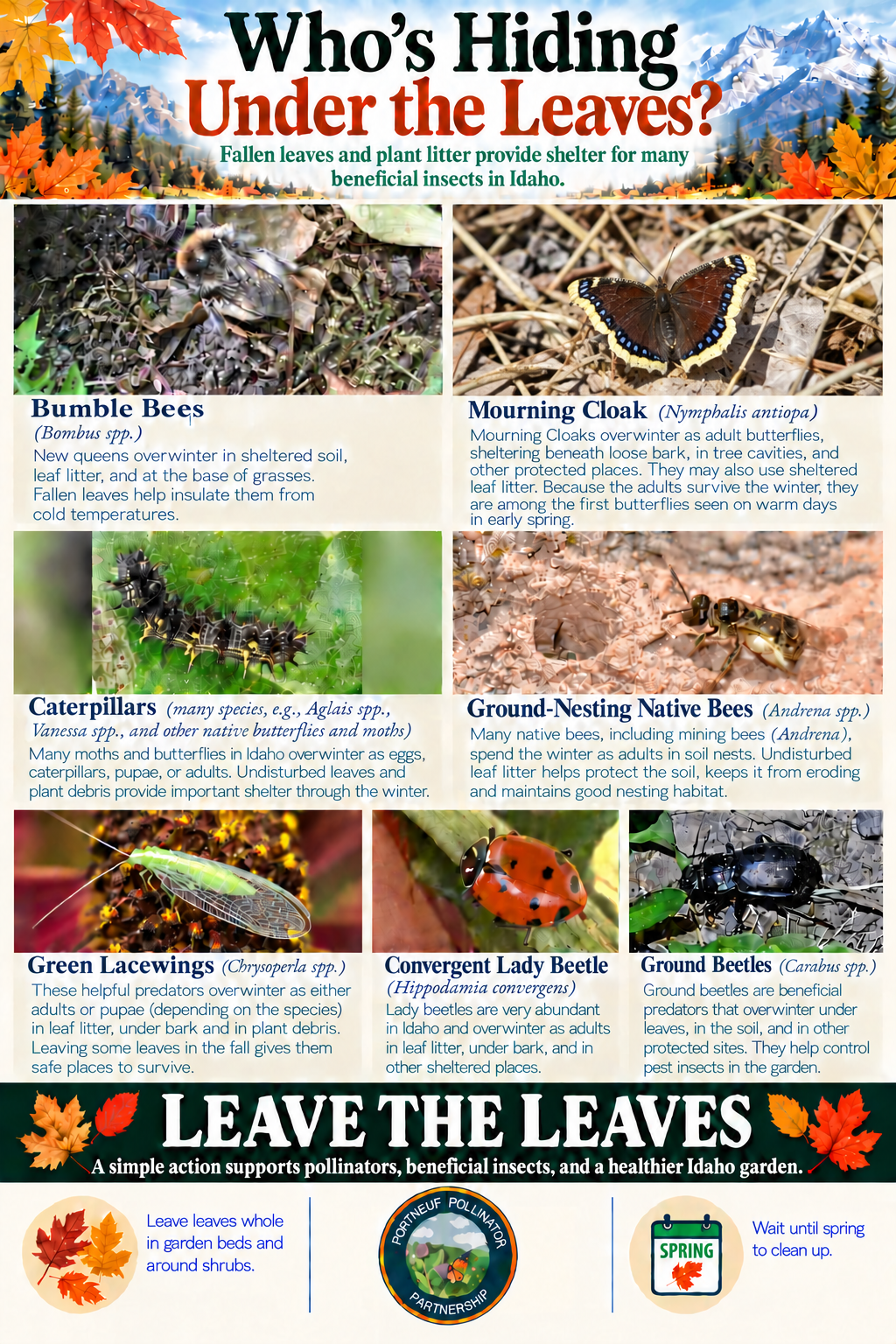
Who’s Hiding Under the Leaves?
Fallen leaves and plant litter provide shelter for many beneficial insects in Idaho. The simple action of leaving the leaves and waiting until spring to clean up supports pollinators, beneficial insects, and a healthier Idaho garden.
Bumble Bees (Bombus spp.)
New queens overwinter in sheltered soil, leaf litter, and at the base of grasses. Fallen leaves help insulate them from cold temperatures.
Mourning Cloak (Nymphalis antiopa)
Mourning Cloaks overwinter as adult butterflies, sheltering beneath loose bark, in tree cavities, and other protected places. They may also use sheltered leaf litter. Because the adults survive the winter, they are among the first butterflies seen on warm days in early spring.
Caterpillars (many species, e.g., Aglais spp., Vanessa spp., and other native butterflies and moths)
Many moths and butterflies in Idaho overwinter as eggs, caterpillars, pupae, or adults. Undisturbed leaves and plant debris provide important shelter through the winter.
Ground-Nesting Native Bees (Andrena spp.)
Many native bees, including mining bees (Andrena), spend the winter as adults in soil nests. Undisturbed leaf litter helps protect the soil, keeps it from eroding, and maintains good nesting habitat.
Green Lacewings (Chrysoperla spp.)
These helpful predators overwinter as either adults or pupae (depending on the species) in leaf litter, under bark, and in plant debris. Leaving some leaves in the fall gives them safe places to survive.
Convergent Lady Beetle (Hippodamia convergens)
Lady beetles are very abundant in Idaho and overwinter as adults in leaf litter, under bark, and in other sheltered places.
Ground Beetles (Carabus spp.)
Ground beetles are beneficial predators that overwinter under leaves, in the soil, and in other protected sites. They help control pest insects in the garden.