Resolving Power of the Eye (Angular Resolution)
Brief Description
This demonstration displays the eye’s inability to resolve two far away points of light due to the diffraction caused by the pupil. Based on “Rayleigh’s Criterion”, which states that two points are just resolvable if the central peak of one is on top of the minimum of the other, the angle that two barely resolvable points make with the eye of the observer is approximated by, θ ≈ 1.22λ/D where λ is the wavelength of the light and D is the diameter of the observer’s pupil.
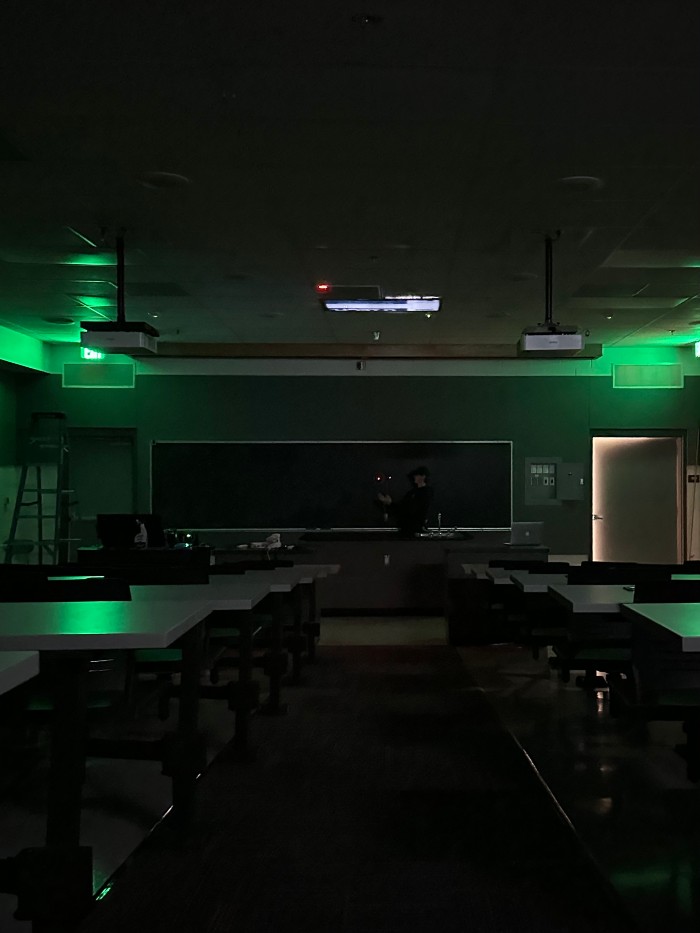
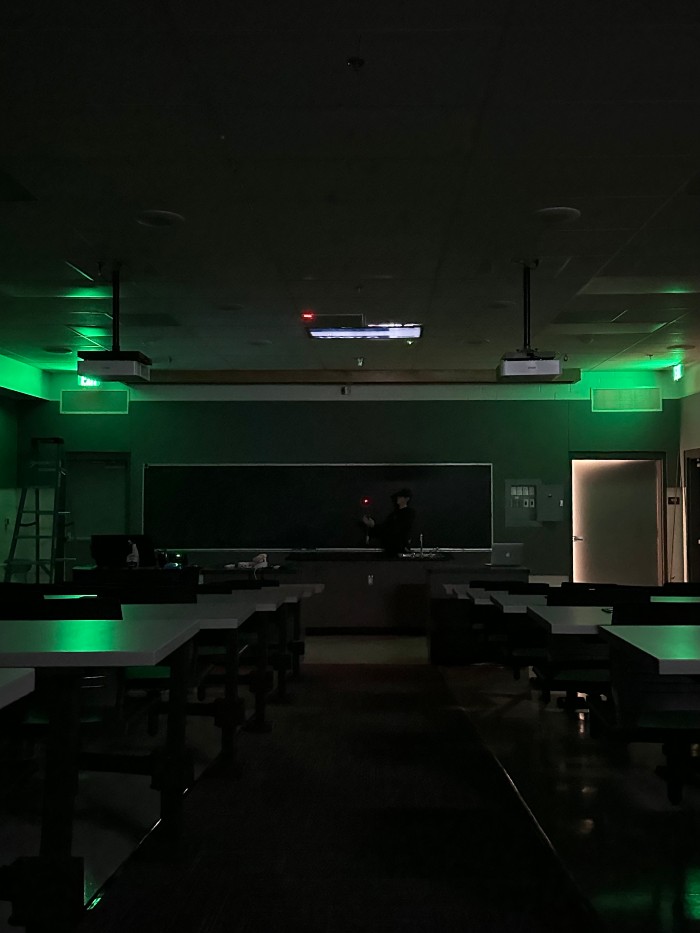
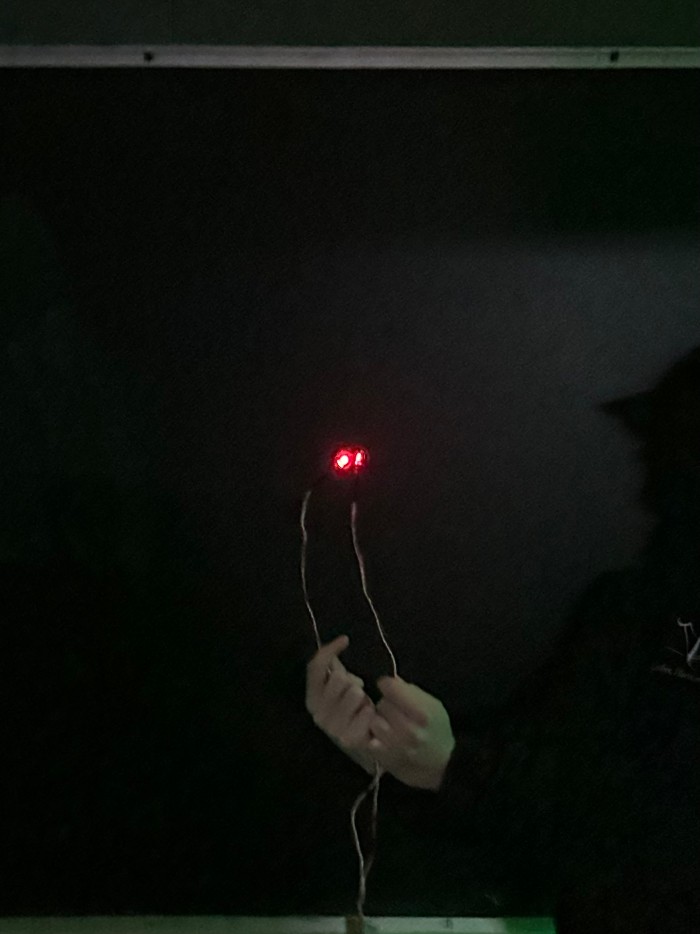
The demo tests this by asking a student to stand at the back of the classroom while you hold up two small LEDs and bring them closer together until the student can’t make out that there are two separate lights.
Materials
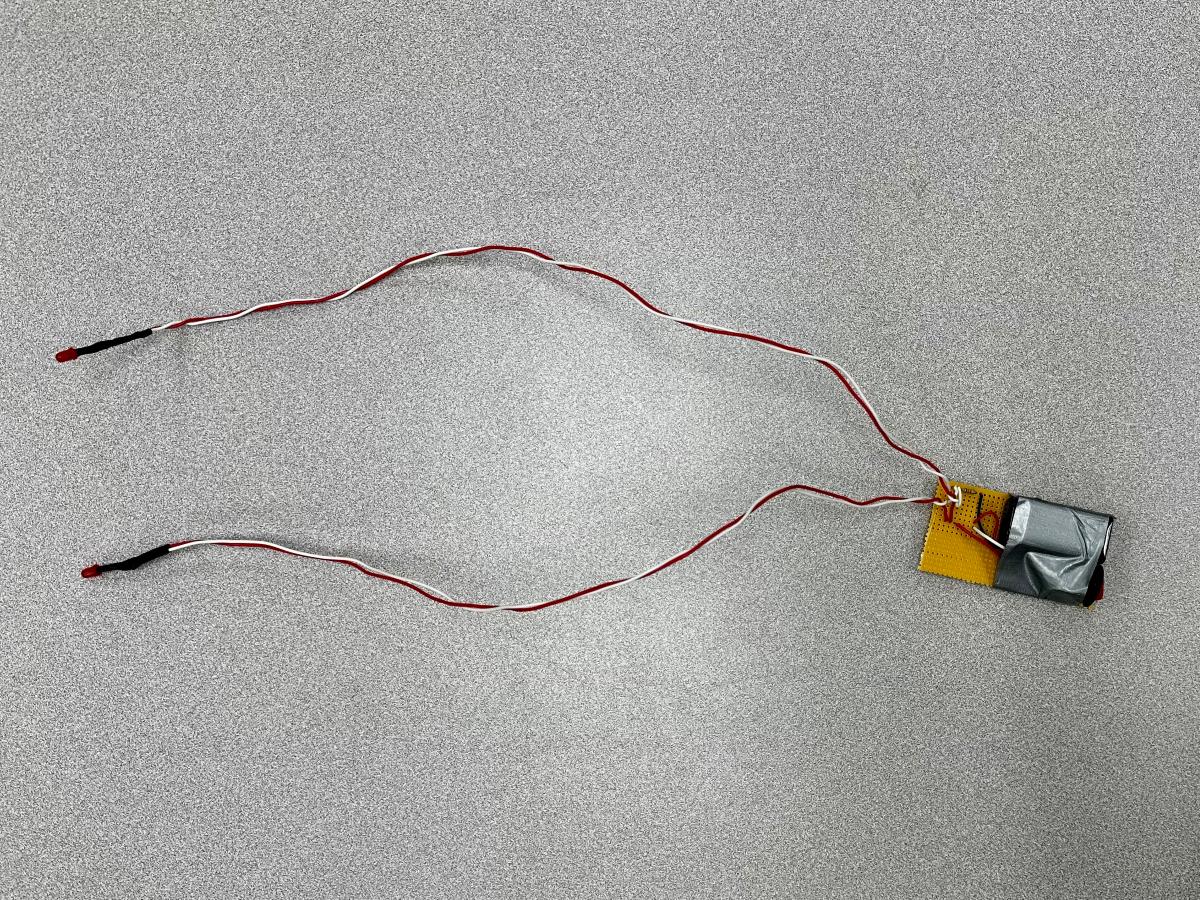
Angular Resolution LED device (found in the flashlight drawer).
Performing the Demo
This demonstration works best with the lights off because the LEDs are not very bright. Optionally, you can cover the two ceiling lights that stay on as well. However, it should be kept in mind that with the lights off, the pupils dilate. This means that the diameter of the pupil is larger, so the angle at which two lights are resolvable is smaller.
Ask a student to stand at the back of the classroom and hold up the two LED’s next to each other. Move them closer together until the student can no longer make out the two separate lights. The pupil is around 4mm in diameter. The LED’s are red, so the wavelength is about 650nm. Using these values, a person 10m away should barely be able to resolve the two lights when they are about 2mm apart.
Depending on the person, the classroom might not be long enough for the two lights to be indistinguishable.