
Mental Health Trailblazers: First Cohort in New Doctoral Psychology Program Begin Their Journey this Fall
October 26, 2026
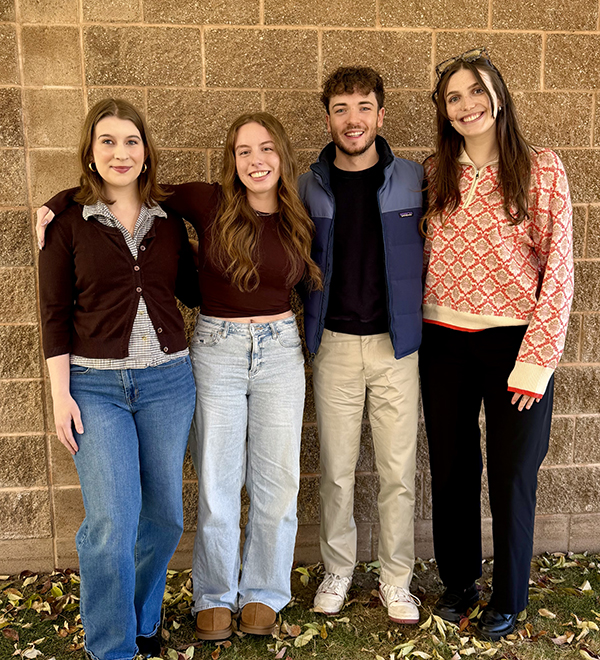
Amidst a growing shortage of mental health professionals in our state, Idaho State University is preparing the next generation of clinical psychologists. Approved last year, ISU’s new Doctorate of Psychology (PsyD) program is welcoming its first cohort of students this fall on the Meridian campus.
With an emphasis on hands-on clinical work, the program will train students in practical clinical psychology. Additionally, the program offers integrated behavioral health and rural mental health as areas of specialization. Shannon Lynch, a professor of clinical psychology and the PsyD director of clinical training at ISU’s Meridian campus, emphasized the healthcare gap this program aims to fill.
“The new ISU PsyD program aims to train individuals to provide evidence-based assessment and treatment services in Idaho. According to the Department of Labor Statistics, clinical psychology is a growing field nationally and in Idaho, with about 10% projected growth in Idaho over the next 10 years. We know there are long wait lists to obtain mental health services in Idaho,” said Lynch.
Though the program is just beginning, it’s already attracting students from all over the Mountain West. From working in crisis response and telehealth psychiatry to navigating barriers to care in their own communities, students are entering the program with a shared interest in making mental health services more accessible.
Kendra Mullings and Meghan Mahoney shared how their experiences working in crisis triage and telehealth psychiatry have given them valuable insight into their field. Direct patient care and other personal experiences have made all the difference in infusing their work with purpose, and it has kept them on the path of clinical psychology.
“Working closely with providers and staying close to patient care every day is what turned psychology from an interest into a calling. Helping someone better understand themselves and the world around them gives my work purpose, and that's what brought me to ISU,” said Mahoney.
Watson Crenshaw, who has a background in crisis management, shared about the joy of working directly with patients.
“Young adults who struggle with mental health issues have a special type of resilience and humor that makes being able to help them both enjoyable and fulfilling,” said Crenshaw.
For Alicia Johnson, the decision to pursue psychology is rooted in her experiences growing up in Idaho.
“I grew up in Mountain Home, Idaho, a medically underserved community, where I experienced firsthand the barriers that can limit access to healthcare. Losing my mom to suicide in high school ultimately led me to pursue a career in psychology. Through my grief, I became passionate about reducing the stigma surrounding mental health care and increasing access to mental health services, particularly in rural areas,” said Johnson.
With the growing need for mental health services in rural and underserved Idaho communities, Lynch underscored the focus on hands-on training.
“Students will offer services to the community beginning in their second year of our program in our ISU psychology clinic in Meridian, opening Fall 2027,” said Lynch. “This hands-on, closely supervised training provides students with opportunities to build essential clinical skills and foundational knowledge while addressing mental health needs of our surrounding community. We will be offering students training in telehealth services and integrated health services to better reach our rural and underserved populations.”
The students themselves are also looking forward to making a difference. Mahoney expressed a desire to work in underserved regions, such as rural areas, through the use of telehealth. She also spoke to her experience working in telehealth and the technology’s potential to expand access into places where mental health care is severely limited. Mullings wanted to address healthcare disparities by targeting a specific underserved community—autistic adults who may have difficulty accessing appropriate support.
“I hope to help remove the stigma and barriers that exist in Idaho after completing the program,” said Crenshaw. “Along with working with my own clients in the future, I hope to advocate to our state legislators for more resources and financial assistance to go toward mental health programs.”
“I value the program’s emphasis on integrative care, which I believe is essential to address the inequities that exist within our healthcare system,” said Johnson. “Overall, I hope to contribute to Idaho’s mental health workforce and give back to the communities that shaped me.”
With such high aspirations, it’s fitting for these students to be making history and setting a standard as the first PsyD cohort in Idaho. Nearly every student spoke to the significance of the new program, and the responsibility that comes with being the first group to take this step forward.
“It's the chance to see a long-held goal through to reality, something I don't take lightly,” said Mahoney.
“Being born and raised in Idaho and being able to return to the state's first PsyD cohort feels incredibly monumental,” said Crenshaw. “All of my grandparents, siblings and my parents live in Idaho, and I feel proud to be able to come back and serve a state and a community they have been a part of for so long. This first cohort is just the beginning of something that I believe will make a profound difference in the lives of so many Idahoans.”
“I feel honored to be a part of this program’s first cohort. It feels meaningful to know that our program not only wants us to succeed, but is committed to providing us with the tools and support we need to get there,” said Johnson.
“Being a part of the first cohort for Idaho State University's PsyD program to me means being proactive and setting the tone. When other cohorts are admitted, I want them to feel comfortable and know that they can come to our cohort with any questions or concerns. There’s a certain responsibility that comes with being the first cohort that I am ready and willing to take on,” said Mullings.
Shannon Lynch also shared about the positive impact this program will have on our state.
“Many people in Idaho cannot get the mental health assessment and treatment services they need. It is important to improve access to quality mental health care in Idaho,” said Lynch. “It is important to me to help train psychologists who will provide excellent services to everyone in our communities. By training students in Idaho, we hope to see a growth in the number and types of mental health services provided to residents of Idaho and to improve access to care in our state.”
Mahoney summed up the cohort’s feelings well: “I'm grateful for the chance to grow as both a clinician and a leader through [the program]. As I transition to focus solely on the program, I'm looking forward to the years ahead and to giving back to the community that raised me. Special thanks to Dr. Lynch, Dr. Johnson, and all the faculty whose vision and tireless work built this program from the ground up and made it possible for students like me to pursue this dream at ISU.”
For more information about the program, visit the PsyD’s webpage.
Categories: