
Celebrating A Decade of Pharmacy Education in The Last Frontier
October 27, 2026
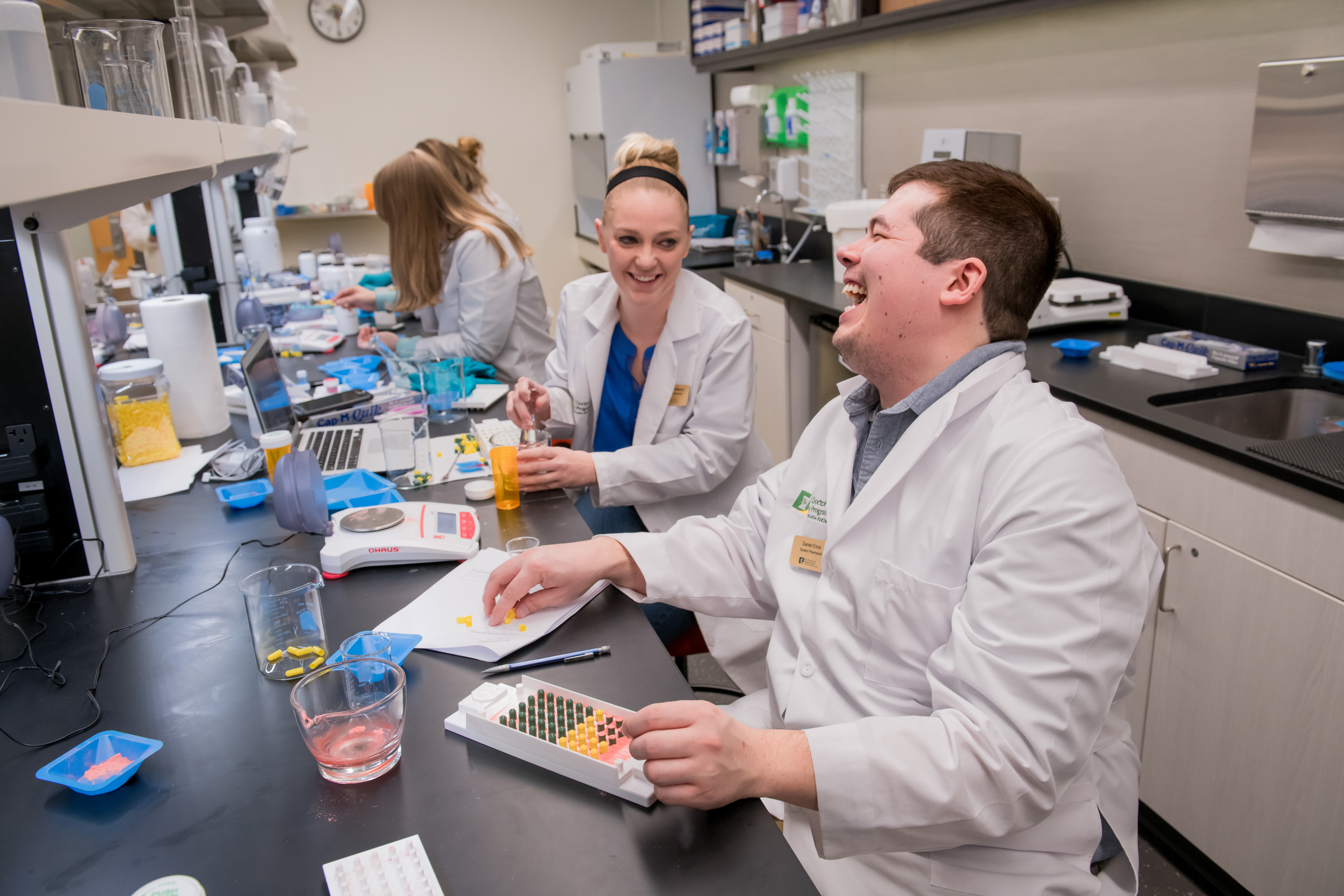
Alaska’s access to pharmacy care was shrinking fast in the mid-2000s. Open pharmacist positions took months to years to fill—if they ever did—leaving some hospitals and rural clinics without a pharmacist for extended periods of time. Bringing a pharmacy program to The Last Frontier was critical for remediating this decline in care, as the majority of students who left Alaska for their pharmacy education didn’t return to the state to practice.
Idaho State University and University of Alaska Anchorage (UAA), along with the Alaska Pharmacy Association, set out to bridge this gap and bring pharmacy education to Alaska. It took nine years for the partnership to fully come to fruition, with the first cohort of Alaskan students beginning in August of 2016. This fall, both universities celebrate the 10-year anniversary of the start of the UAA/ISU Doctor of Pharmacy Program.
“We've put more than 60 pharmacists into the world and 95% of them now practice in the state of Alaska,” said Mara Seignemartin, ISU’s Alaska programs coordinator. “I know 60 pharmacists might not sound like a large number, but that does make an impact on healthcare in Alaska. We’re providing new care providers and helping to push pharmacy forward in Alaska. It's really exciting.”
ISU’s pharmacy program has been training Idaho pharmacists for over a century. The program was the first ISU health sciences program in both Pocatello and the Treasure Valley. Its robust history and synchronous in-person and online hybrid model perfectly positioned the program to expand to Alaska. Students in all three locations attend classes synchronously, ensuring that every student receives equal, quality instruction.
“We created an academic home for pharmacy in the last state without one—training Alaskans in Alaska for Alaska while bringing the profession together,” said Dr. Tom Wadsworth, founding assistant dean of the Alaska program and now dean of Idaho State University’s L.S. Skaggs College of Pharmacy and Health Professions. “It was a novel model that has proven to be an enduring one. We’re incredibly proud of what we’ve built over the past 10 years and look forward to the next 10.”
Within the past decade, ISU and UAA have worked to expand not just education, but the practice of pharmacy as a whole in Idaho and Alaska. ISU played an integral part in drafting the language used to expand the scope of pharmacy practice through the passing of multiple Idaho house bills between 2017-2019. This legislation allows pharmacists to test for common ailments, such as Covid, and prescribe the necessary medications for treatment—a term called prescriptive authority.
Being able to prescribe medications for common illnesses and conditions allows for people to access medications without visiting a physician’s office. For some communities in both Alaska and Idaho, a pharmacist is the only healthcare provider within their town. With 80% of Alaska not being connected by roads, access to a physician can be limited or impossible for locals. Instead of long periods of travel to receive an antibiotic prescription for strep throat, individuals can now receive this test and treatment from their local pharmacist.
Idaho was one of the first states to broaden pharmacists’ prescriptive authority, and Alaska will be the next state to do so. This June, Alaska Governor Mike Dunleavy vetoed House Bill 195, which would give pharmacists the same prescriptive authority that Idaho has. However, the Alaska Legislature voted to override Gov. Dunleavy’s veto. So far this year, the legislature has only overruled three governor vetoes, with HB195 being one of them. The bill will go into effect on January 1, 2027.
Student involvement in pharmacy advocacy and with the Alaska Pharmacy Association has also been a highlight for UAA/ISU Pharmacy students. Corrie Black, clinical critical care pharmacist at Providence Alaska Medical Center (PMAC) and graduate of the inaugural UAA/ISU pharmacy cohort, reminisces on her extracurricular opportunities.
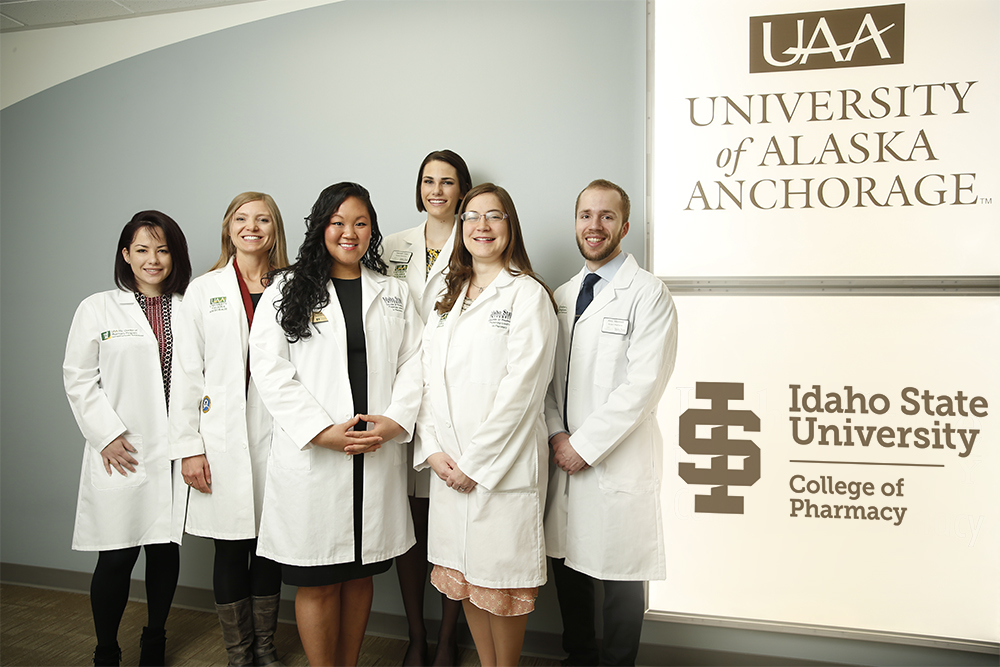
“Going to the state capitol, and meeting with our representatives to help promote pharmacy was definitely a highly memorable experience,” said Black. “Plus involvement with the Alaska Pharmacy Association and participating in those meetings as a student had an impact as well. Those types of activities outside the classroom were meaningful.”
Black has remained connected to the program through training current UAA/ISU students in the adult ICU at PMAC, giving them hands-on experiences in the field of clinical pharmacy. She also works with the medical center’s pharmacy residents to give in-depth training to future critical care pharmacists.
In the next ten years, ISU and UAA plan to continue expanding pharmacy education and practice to include a multidisciplinary approach to healthcare, where pharmacists are an integrated part of a patient’s medical team. The first step is the normalization of prescriptive authority across all fifty states, with Idaho and Alaska leading the charge.
“It's not that we just established a school, we established a school that changed things,” said Wadsworth.
Categories: