
Anthropology Professor Co-Edits Publication on Environmental Studies
October 8, 2026
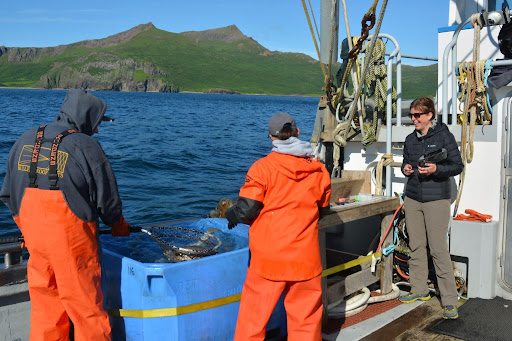
From Alaska to Tanzania, human beings have always found a way to survive and build community. A new book seeks to shed light on work that is often overlooked and underappreciated: the work of women in governing a community’s resources.
Katherine Reedy, interim dean and a professor of anthropology at Idaho State University College of Humanities, Education and Social Sciences, recently co-edited a long-awaited volume titled Women’s Impact on Environmental Governance. The work, a collection of case studies that explore women’s roles in managing environmental resources, covers several communities around the globe—including Reedy’s lifelong area of study.
“I have worked as an anthropologist in the Alaska Peninsula and Aleutian Islands communities since 1995,” said Reedy. “My projects have been about fishery politics, human-environmental relationships, indigenous Unangax̂ culture and practices, and other topics, but all have the same question at their core. That question is, how are the communities sustaining their cultures and economies in challenging environmental, political and economic circumstances?”
In part, this new book seeks to answer that question. “My chapter explores how women are critical to maintaining identity, heritage, traditional knowledge and practices through food and labor sharing networks, informal markets, culture camps and in political arenas where state and federal regulations also determine many of these practices.”
Reedy first got involved with this work as an undergraduate student tagging along on archaeological digs, then continued as a graduate student doing research for her dissertation. Ever since then, she’s worked as a cultural anthropologist across a huge swath of area—twelve different coastal villages in the North Pacific and Bering Sea.
This new publication is a product of her own experience, conversations with former Idaho State University professor Sarah Ebel, and a conference with a host of other interdisciplinary scholars from across the globe. Studies in the book come from Bangladesh, Peru, Tanzania, Ethiopia, Kenya, Chile and the United States.
Reedy reveals what drove their discussions: “We were thinking about the roles of women in shaping governance of the natural resources they depend upon and how they can often be the unseen forces in working to improve their communities.”
Reedy also reflected on her experiences as a woman working in anthropology.
“Initially, I think I was regarded with suspicion by some,” she said. “Relationships with women grew when I started having kids of my own and bringing them to the villages. I’m so glad that happened because it allowed me to see women’s work in the communities more extensively than before. They are essential labor on land so that their fathers, husbands, brothers and sons can be successful at sea.”
Interested in learning more? The book can be found and purchased online.
Categories: