
Shooting for the Moon
ISU Alumna Serves as NASA Science Officer on Artemis II Mission
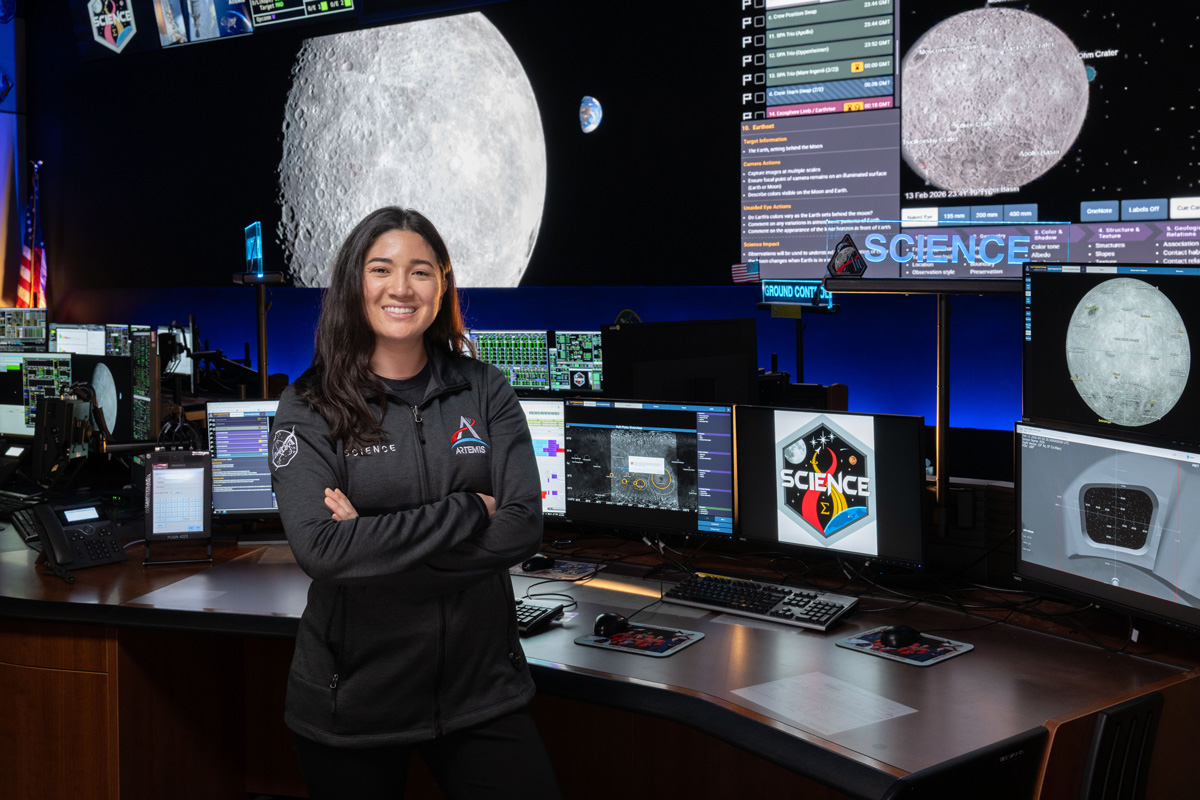
Angela Garcia’s career has taken her as close to outer space as you can get without being an astronaut. During NASA’s 10-day Artemis Mission in May 2026, Garcia was one of the three science officers stationed at the SCIENCE console in Mission Control.
The Idaho State University alum spent her youth on the Hawaiian Island of Oahu. The idyllic setting got her curious about the natural world.
“I’ve always loved the outdoors and the way you read Earth’s history has always resonated with me,” said Garcia. “Nature is this grand teacher, and geology is Earth’s storybook, and the rock record is the language.”
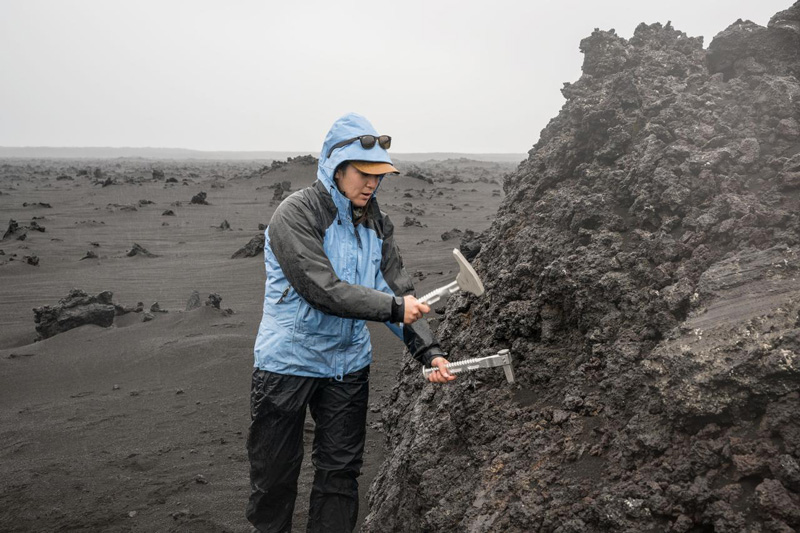
After high school, Garcia headed to the University of Nevada, Las Vegas (UNLV) to major in geology. It was during her time in Vegas that she got her first taste of out-of-this-world work with NASA.
“I was working in a geochemistry lab doing research on Martian soil,” Garcia said. “We got data back from the rovers, so we were trying to replicate some of those results in the lab.”
As her time at UNLV wound down, Garcia started looking into graduate schools. A friend attended ISU’s five-week field camp at the Lost River Field Station near Mackay, Idaho and met Shannon Kobs Nawotniak, professor of geosciences at ISU, who was working on her own projects with NASA. After a bit of prodding by her friend, Garcia reached out to Kobs Nawotniak and found a kindred spirit.
“I really went to ISU because Shannon’s my girl,” Garcia said. “She’s so generous with her time, and she really cares about students’ success and is a really great mentor. Shannon really sold ISU.”
After earning her bachelor’s degree at UNLV, Garcia completed a summer internship with Jacobs Technology at NASA’s Johnson Space Center. Once at ISU, she plunged into the Systematic Underwater Biogeochemical Science and Exploration Analog (SUBSEA) project. Under the guidance of Kobs Nawotniak, she studied places deep in the ocean that could most closely resemble sites that might harbor life on other planets or moons. During her work with SUBSEA, Garcia, along with another graduate student, Ashley Shields, discovered a new hydrothermal vent field in the Pacific Ocean.
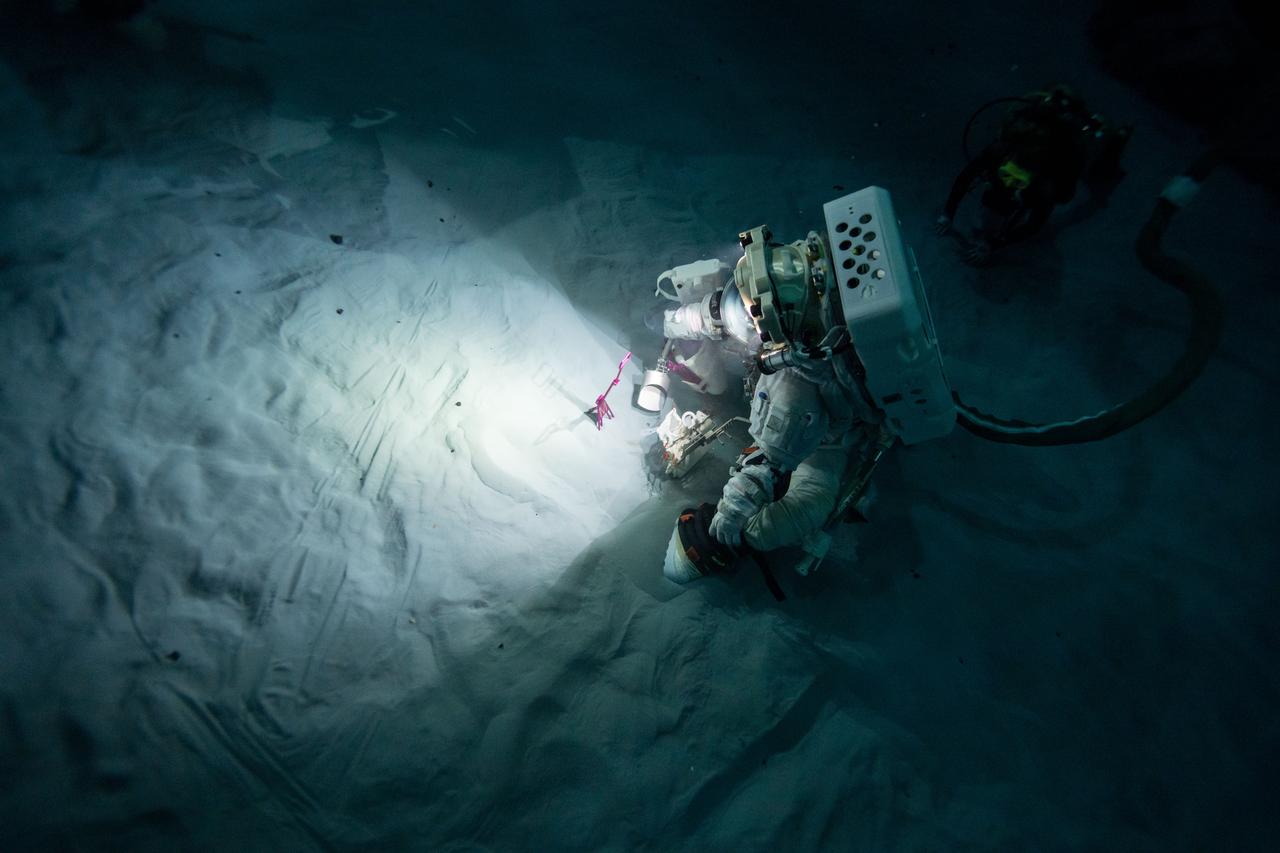
Midway through her time at ISU, Garcia took a brief break to complete another internship at NASA. Garcia returned to Pocatello to complete her master’s while working remotely on her internship project, then was hired at NASA for a full-time position post-graduation. At the time, the Artemis program was in its early stages, and Garcia was tasked with investigating ways to mitigate the problems caused by lunar dust.
“It was a practical kind of application of sciences versus doing research,” explained Garcia. “It was like, ‘Hey, you have knowledge about these materials, now help engineers build hardware that can withstand that natural environment.’”
From there, Garcia was tasked with training the Artemis II astronauts and NASA support staff in lunar geology.
“When the crew gets assigned for missions, we will also take them out and teach them more mission-specific skill sets,” said Garcia. “To train people to go to the Moon, you have to train them how to use the suit, how to use geology tools, and how to do science, but within those limitations.”
As the Artemis program picked up steam in preparation for Artemis II’s mission around the Moon, NASA went to work rounding out the teams who would support the four astronauts while they were in space.
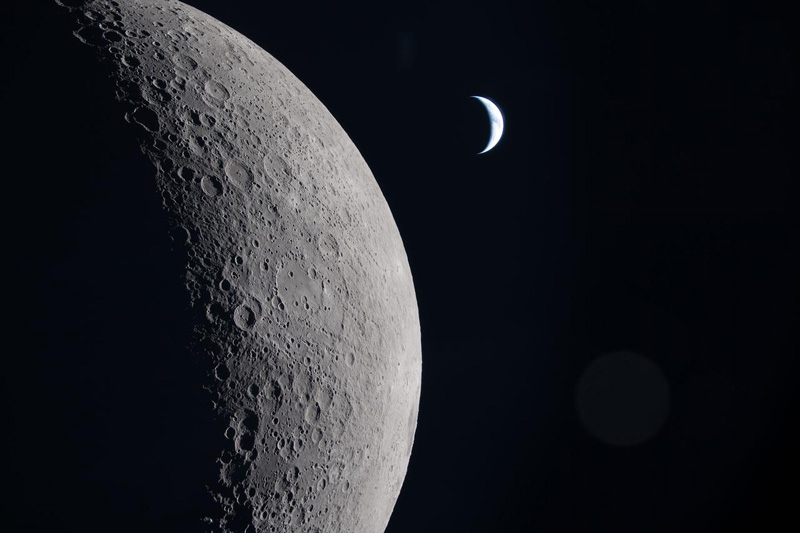
Brand new for Artemis II would be the incorporation of science officers into mission control. Garcia fit the bill, and served alongside her colleagues, who focused on other mission functions such as life support, communications and propulsion.
“I think I was picked because I was able to work in environments that can be undefined but still be productive, and have a good attitude, work hard, and produce results. I’m a very detail-oriented, process-written-down type of person,” Garcia said, “and so I think that was a skill set that benefits a lot to have in the group because as we figure out stuff, I’ll make sure that it gets written down and kind of codified.”
Looking ahead, Garcia plans to stay with NASA and the Artemis program and see it through to the crewed landings on the Moon.
“I’ll be a part of that in whatever capacity is needed of me,” Garcia said. “It’s definitely been a whirlwind of work and very humbling. I’m super honored that I’m able to be one of the few people who are at that very tip who are building the path for folks to come in and continue.”