
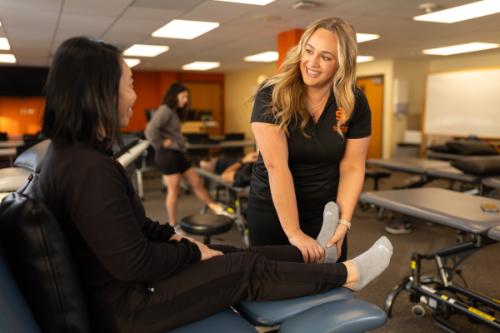
Individuals receiving physical therapy care in southeastern Idaho today are likely being treated by a graduate of Idaho State University’s physical therapy program. As the only institution in the Gem State with an accredited program, ISU has been committed to training exceptional physical therapists for over three decades.
The program started out as a Master of Physical Therapy, graduating its first cohort of students in 1991. At the time, physical therapists were a relatively new player in the healthcare game. Interest in the profession was growing rapidly throughout the United States and, as the field matured, so did ISU’s program. In 2002, ISU’s Master of Physical Training program transitioned into the Doctor of Physical Therapy (DPT) program that it is known as today.
Corey Rasmussen, owner of Physical Therapy Specialists of Idaho in Pocatello and Chubbuck, was one of the first graduates of ISU’s DPT program. He has made substantial positive impacts on Bannock County residents, with his clinics notably receiving the Idaho State Journal’s Readers’ Choice Award for Best Physical Therapist almost every year since 2017.
“I would probably say I've treated around 4000 people over the course of 50,000 visits,” said Rasmussen. “And that's just me. What I like about my position now is I'm training all these other physical therapists, and so my reach is exponential at this point. We've really helped a lot of people in the community.”
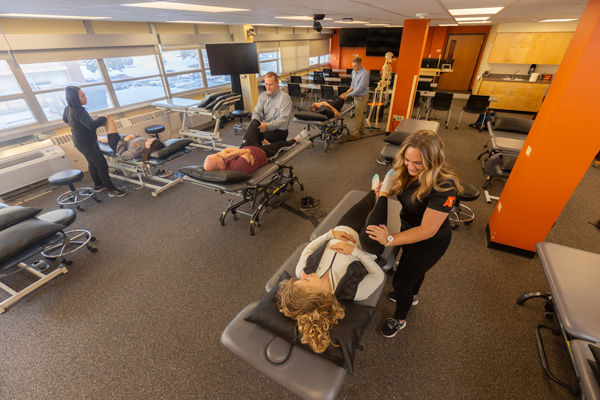
Physical therapists are an integral part of the healthcare landscape, providing patients of all ages with a realm of services aimed at enhancing one’s quality of life. This can include bringing back a patient’s range of motion after an injury, managing chronic conditions, and even pinpointing ways for an individual to prevent injury before it occurs. In states where citizens primarily work physically laborious jobs, physical therapists are critical in maintaining the health of the community and workforce.
Recent data from the Idaho Department of Labor highlights the need for physical therapists in the state, projecting that the field will grow in the state by 30% by 2032. It is the tenth fastest growing healthcare profession in Idaho and consistently ranks high in job satisfaction.
To address this need, ISU doubled the amount of students admitted to the program by expanding the DPT program to its Meridian campus in 2018. In 2025, 93 percent of ISU PT graduates passed when taking the national physical therapy exam for the first time. In comparison, the national average for first-time test takers who are graduates of an accredited PT program was 85 percent.
Ben Waldron, recent DPT graduate and winner of the ISU DPT Clinical Achievement Award, plans to start his career at a local clinic with aspirations to open his own practice to support rural Idahoans in southeast Idaho.
“I think it's good to give rural communities options for healthcare providers because sometimes you mesh well with one person, sometimes you don't,” said Waldron. “It's good to have those options to be able to find the provider that will best serve you and your needs.”
Rasmussen, Waldron, and James Ralphs, clinical associate professor and assistant DPT program director, all agree that what makes a successful provider is their ability to connect with their patients. Unlike medical professions where providers spend minimal time with patients, DPTs are with their patients up to one hour per visit. Depending on a patient’s treatment plan, these visits can even be multiple times per week.
"You're meeting people at a potential low point in their life because things they could previously do are no longer easy, or they have experienced a loss in function. And you have the privilege to guide and walk the journey of recovery with them," said Ralphs. "I think what makes a successful physical therapist is one who is adept at the science behind health and healing. But if you want to be great, you've got to combine that with the art of caring and be able to do both."
Thirty-five years of graduating competent, caring physical therapy professionals is proof that ISU DPT faculty both embody this message and instill it into their students.
“ISU Physical Therapy has always had remarkable people who are working for all the right reasons.” said Nancy Devine, retired professor emeritus who began teaching for the program during its second year.
ISU is excited to continue developing DPTs, with future plans including creating a bridge program for established Physical Therapy Assistants to earn their doctorate degree and become licensed physical therapists, as well as bringing more devoted faculty in to instruct for the program.