
Learning on Common Ground
Transforming Environmental Research Through Tribal and University Partnerships
A growing partnership between Idaho State University and the Shoshone-Bannock Tribes is already paying dividends in research endeavors and student and community support.
As part of a commitment made in a 2025 Memorandum of Understanding, tribal leaders and the University are working together to bring new environmental research and education to the forefront, and to bring new perspectives to classrooms and laboratories campuswide.
In the classroom and in the field, ISU is utilizing a collaborative framework that brings university researchers and local community members together to solve regional issues. Tribal experts, professional staff, and faculty operate as equal contributors to address critical energy and water challenges. Students are developing advanced research methodologies that respect traditional ways of knowing, and local K-12 teachers now have access to curriculum that integrates authentic Native perspectives into science and civics courses.
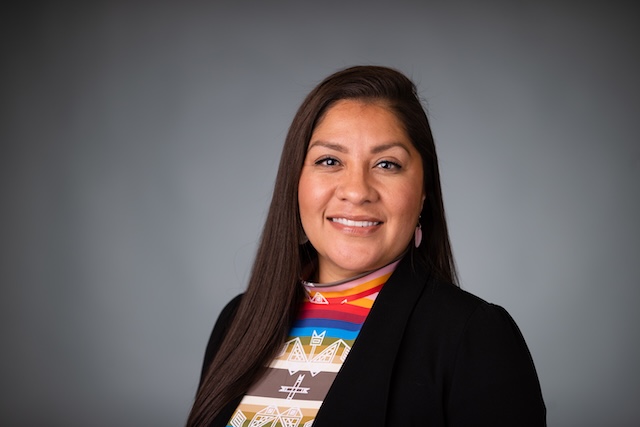
To help provide a well-rounded experience for all students, Idaho State is also working to ensure that Native American and Indigenous students have the support they need so they can bring their perspectives to the learning environment. Along with Marshall, who began her work in 2025, Summer Baldwin joined ISU as the Native American Student Services Coordinator in July 2026. Baldwin works directly with students, helping them connect with campus resources, build community, and navigate their educational experience at ISU. She also coordinates student programs, cultural activities, and engagement opportunities.
“I'm so excited to start this new chapter,” said Baldwin. “I'm so proud and inspired by our students. Growth in others fills my heart.”
Idaho State University is utilizing an educational model known as the Community Integrated Program (CIP), a collaborative framework that brings university researchers and local community members together to solve regional issues. Rather than keeping academic research confined to campus libraries, this program structure builds courses and research projects directly alongside community partners, embedding Indigenous knowledge systems and Native perspectives into its core design. In a CIP, tribal experts, professional staff, and university faculty operate as equal contributors to address critical energy and water challenges. This partnership has already generated a continuous network of practical educational resources: local K-12 teachers now have access to curriculum units that integrate authentic Native ecological perspectives into science and civics courses, while university students are developing advanced research methodologies that respect traditional ways of knowing. By recognizing tribal partners as active producers of scientific and cultural data, the program transforms how universities engage with regional communities.
This specific Community Integrated Program framework succeeds by combining academic theory with local, place-based Indigenous knowledge. Grounded in an educational approach that uses the land and physical environment as a primary classroom, the curriculum emphasizes that addressing complex environmental challenges requires what Mi'kmaw Elder Albert Marshall terms Two Eyed Seeing, which means learning to use the strengths of Indigenous ways of knowing and Western scientific methodologies together for collective benefit. The Shoshone-Bannock Tribes hold centuries of deep, adaptive expertise regarding regional land and water systems. By centering tribal perspectives and collaborating with regional experts, the program restructures the traditional university research dynamic, positioning university participants and tribal contributors as equal co-learners.
To achieve this synthesis, the program integrated a comprehensive, Native-led speaker series into the classroom. Students engaged directly with eight practitioners, researchers, and consultants, including organic food systems consultant Sidney Fellows, tribal water resources professor Shanny Spang-Gion, and ISU anthropology and linguistics student Ontaria Ariwite, who presented on Uto-Aztecan terminology for water. These direct interactions provided students with primary source data, allowing them to examine the ecological, ethical, and ceremonial dimensions of water resource management directly from Indigenous knowledge keepers.
This structured academic course also prepared students for immersive, land-based field learning. Led by tribal experts, students participated in field trips to regional sites, including an examination of the Fort Hall Bottoms with Lytle Denny, deputy executive director of Shoshone-Bannock Tribes Natural Resource Division, where students learned about the history of the Fort Hall Bottoms, the changes the land has undergone, and the impact on traditional practices. A subsequent excursion to Lava Hot Springs and Indian Rocks, hosted by tribal historical researcher Nolan Brown and Randy’L Teton, Shoshone-Bannock Tribal member and author, provided historical and cultural context for regional water systems. For anthropology graduate student Cecily Shepherd, analyzing these sites within their natural geography was critical. "Being able to look at local places through a different lens was really important," Shepherd stated, noting that understanding these environments is difficult without direct physical presence. "That is the first step towards being able to acknowledge that there are different ways of seeing, knowing, or learning than what you are accustomed to. That is especially important when interacting with other cultures, and Native peoples in particular."
These field experiences and interviews directly informed the student outcomes showcased during the university’s Indigenous Peoples Day celebration. Under a midterm research poster series titled Water is Our Relative, students in the collaborative course demonstrated the variety of regional Native Nations and their unique, modern relationships to environmental systems. The project Leave it in the Ground examined Indigenous archaeology, highlighting tribal perspectives that view artifacts as living relatives that must remain in-site to preserve site integrity. A second presentation analyzed how land-use laws disrupted big game migrations, linking Newe (Shoshone-Bannock) food sovereignty directly to ecological health. The third project, Swimming Upstream, outlined the political barriers the Shoshone-Bannock Tribes navigate to maintain salmon subsistence. Grounded in primary sources and tribal data, these presentations demonstrated how cultural practices serve as practical frameworks for modern environmental leadership.
“The most meaningful part of this work is the recognition that the Shoshone-Bannock Tribes are not simply participants in university research, but partners whose knowledge, expertise, and relationship to these lands are essential to the work,” said Idaho State University’s inaugural Director of Tribal Relations Echo Marshall. “True collaboration requires us to build relationships grounded in respect, reciprocity, and trust, while creating space for Tribal knowledge and Western academic approaches to inform one another. That is where meaningful co-learning begins.”
These meaningful cultural and educational outcomes were enabled by funding from the Idaho Community Engaged Resilience for Energy Water Systems grant, known as ICREWS. By focusing on community-identified challenges within energy and water systems, the program establishes an open infrastructure for long-term relationship building among university faculty, professional staff, and tribal entities. The developed K-12 lesson plans are permanently archived online for public educators to utilize, extending the project's impact into the future. Through this model, Idaho State University and the Shoshone-Bannock Tribes continue to advance toward the true co-creation of joint energy and water management futures.